


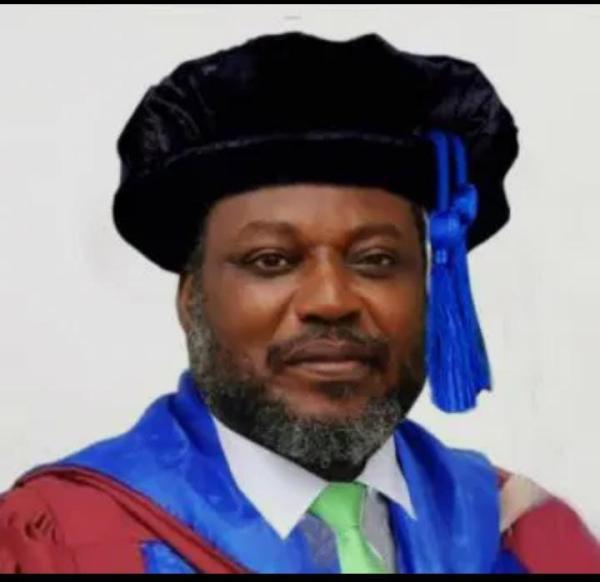
Senior Special Adviser to the Secretary to the Government of the Federation, Professor Babatunde Bolaji Bernard, has emphasized that sustainable use of natural resources remains the most reliable pathway to restoring and safeguarding ecosystem health in Nigeria and globally.
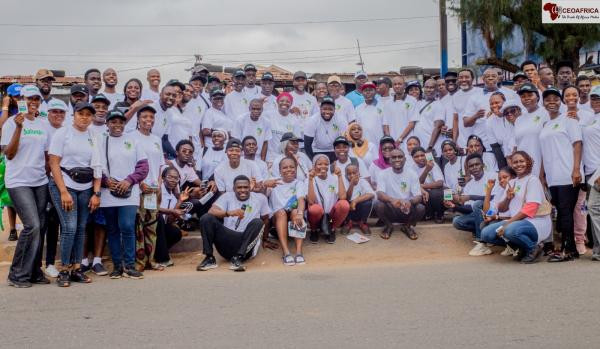
He made this known in his keynote address titled “Sustainable Ecosystem Resource Use: A Panacea to Ecosystem Health,” delivered virtually during the opening ceremony of the 18th Annual Conference of the Zoological Society of Nigeria (ZSN) on Friday, November 26, 2025, at the Trenchard Hall, University of Ibadan.
Prof. Bernard began by defining the environment as the totality of surroundings in which organisms exist, including air, water, land, natural resources, flora, fauna, and the intricate relationships connecting them.
“The environment extends from the immediate surroundings of an organization to the global system. It encompasses the air we breathe, the water that sustains us, the land that supports life, and the countless interrelationships among organisms,” he explained.
He highlighted the importance of natural and ecological cycles—such as the water, carbon, and nitrogen cycles—describing them as the silent engines that maintain the planet’s balance.
“Biogeochemical cycles and biodiversity are fundamental interconnected drivers of all ecosystem services. While these cycles provide chemical flows and nutrient availability, biodiversity performs the biological processes that keep these cycles functioning,” he noted.
Speaking on biodiversity, Prof. Bernard stressed its critical role in ecological stability and the survival of species, humans included.
“Biodiversity represents the variety of life—from microbes to herbivores and carnivores—creating vast networks of interdependence in feeding and ecological relationships. Its loss directly threatens the resilience of ecosystems,” he said.
He warned that human activities continue to degrade natural ecosystems at alarming rates. Citing global records, he revealed: “Since 1980, the world has lost 20% of its mangrove forests, at least 50% of its wetlands, and 38% of its coral reefs. Two-thirds of the world’s largest rivers are now moderately to severely fragmented by dams and reservoirs.”
Prof. Bernard explained that ecosystem services—including food, medicine, minerals, climate regulation, and nutrient cycling—are under threat due to these patterns of depletion. He further delved into the concept of carrying capacity, warning that human overexploitation is pushing ecosystems beyond their natural limits.
“Carrying capacity refers to the maximum number of individuals an environment can support without significant long-term damage. When the rate of resource removal far outweighs the rate of recovery, we risk irreversible ecological collapse,” he said.
He underscored sustainable development as humanity’s most essential tool for continued existence.
“There must be a balance between what we take from the environment and what we allow to regenerate. Sustainable development ensures our needs are met today without destroying the ability of future generations to meet theirs,” he emphasized.
The keynote also highlighted Environmental Management Systems (EMS) as a structured and accountable approach to environmental protection within institutions.
Prof. Bernard described Environmental Impact Assessment (EIA) as an indispensable tool for preventing ecological harm: “EIA is a systematic activity designed to identify, predict and evaluate the impacts of development on the environment, human health, and social wellbeing. It provides early warning signals and supports the protection of biodiversity,” he said.
He concluded by urging policymakers, academics, industries and communities to adopt sustainability-centered approaches to planning and development. “Safeguarding ecosystem health must become a collective responsibility. Our survival as a species depends on how we manage and protect the resources entrusted to us,” he added.