


Nigeria’s AFCON 2025 campaign is often analyzed through the cold metrics of modern football: UK academy structures, elite coaching, and data-driven development.
It is a neat, logical explanation, but it is fundamentally incomplete. Diaspora capital does not travel in a vacuum; it is carried, protected, and transmitted across borders by a force far more potent than any training program, the Nigerian parent.
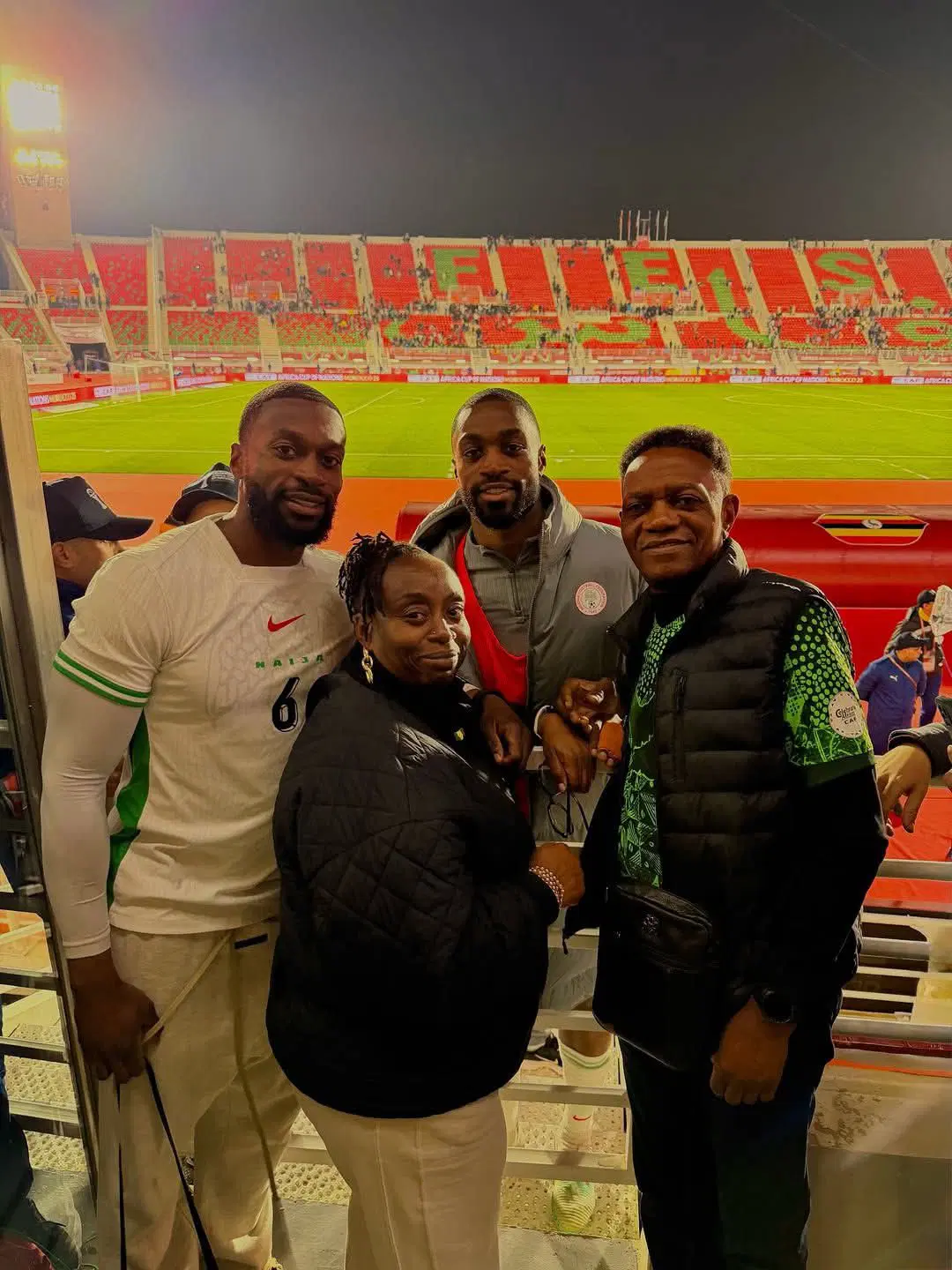
The reality of this “invisible infrastructure” became clearer to me in Fes, Morocco. There, I encountered Mr. Sunday Osayi-Samuel, father of Super Eagles defender Bright Osayi-Samuel.
Despite decades living abroad, nothing about his presence suggested a man detached from his roots. He ate local food, spoke Nigerian Pidgin with effortless rhythm, and moved through the hotel lobbies with the ease of a man who never truly left home. This was not a performance of “Nigerianness”; it was an unbroken continuity.
Behind the technical brilliance of Alex Iwobi, Semi Ajayi, and Bright Osayi-Samuel stands a decisive, quiet force of immigrant parents. These individuals did more than just drive their children to training sessions; they painstakingly preserved a specific moral ecosystem. While navigating Western societies, they maintained a firm grip on Nigerian national ethics and communal obligation.
The result is a unique phenomenon in international football: players who are technically refined by Europe, but emotionally anchored in Nigeria.
In Morocco, this alignment is visceral. The parents of our stars are not hidden away in VIP isolation; they are in the trenches with the fans, sharing matchday rituals, prayers, and the collective anxiety of 200 million people. Their presence serves as a reminder that these players are not “mercenaries” or “foreign products” returning for a shift on international duty. They are, quite literally, extensions of Nigerian households that were simply transplanted abroad.
The Co-Production Model
We often fall into the trap of debating “foreign-born” versus “homegrown” talent. This binary is a distraction. The truth is that the current success of the Super Eagles relies on a co-production model: Western systems provide the technical refinement and career predictability, while African parenting provides the identity.
I saw this clearly in the character of Ola Aina. Long before he became a mainstay of the Eagles’ backline, a local coach once told me, “How I wish that boy was my son.” He wasn’t talking about Aina’s pace or his crossing ability; he was talking about his respect, discipline, and humility. These are not products of a tactics board; they are “home-trained” values that no elite academy can manufacture.
A Lesson for Policy
As we look toward the future of Nigerian football, AFCON 2025 offers a stern lesson for our policymakers. Sustainable excellence cannot be built on infrastructure alone. If we wish to replicate this success at home, we must invest in the transmission of values, the same cultural stabilizers that diaspora parents maintain without government grants or public applause.
Culture is not an accessory in sports; it is a stabilizer. It is the reason these players don’t just qualify for Nigeria—they feel Nigeria.
The Super Eagles are soaring today because of a simple, beautiful paradox: Talent may have left Nigeria, but through the deliberate efforts of their parents, Nigeria never left the talent.
Sola Fanawopo Chairman Osun Football Association writes from Morocco