



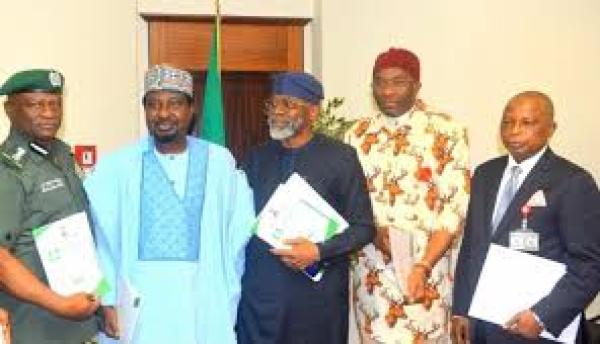
Deliberations on the proposed establishment of state police have progressed to the constitutional amendment stage, according to Femi Gbajabiamila, Chief of Staff to President Bola Tinubu.
Gbajabiamila disclosed this on Thursday while briefing State House correspondents following a consultative meeting on state policing convened by the Presidency at the State House, Abuja.
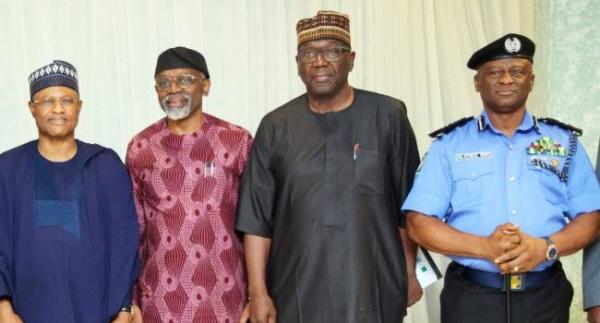
The meeting was attended by Deputy Senate President Jibrin Barau, Deputy Speaker of the House of Representatives Benjamin Kalu, Inspector-General of Police Kayode Egbetokun, and other senior government officials.
Speaking on the outcome of the discussions, Gbajabiamila said significant progress had been made over the past few months, stressing that the creation of state police requires careful consideration of constitutional and legal issues.
“We started deliberations in the last three or four months on how to go about the establishment of state police as directed by Mr President,” he said in a statement issued by presidential spokesman Bayo Onanuga.
“Establishing state police is not something that you do with the snap of the fingers. There is a lot involved in terms of constitution and legalities, and thank God we have now gained a lot of traction.
“Hopefully, the amendment will come shortly, and the details of the amendment will come after that. Right now, what we are looking at is the constitutional amendment itself, and then the enabling law would follow thereafter.”
According to him, discussions are currently focused on the constitutional framework required to pave the way for the establishment of state police, with enabling legislation to follow once the amendments are completed.
The renewed push for state police comes amid growing concerns over insecurity across several parts of the country. Calls for decentralised policing have intensified following recent incidents of mass abductions in Borno and Oyo states.
Senate Leader Opeyemi Bamidele recently said the National Assembly would expedite legislative processes aimed at establishing state police in response to the rising security challenges.
In March, the Inspector-General of Police inaugurated a seven-member steering committee tasked with developing a framework for the proposed policing system.
The debate over state police has gained momentum as stakeholders seek more effective responses to persistent security threats, including kidnappings, banditry and violent attacks in various regions of the country.
On May 15, gunmen attacked three schools in Oriire Local Government Area of Oyo State, abducting about 39 students and seven teachers. Similarly, between May 13 and 14, armed assailants raided a primary school in Chibok, Borno State, and reportedly abducted 42 children.
Advocates of state police argue that decentralising law enforcement would enhance local intelligence gathering and improve response times, while critics have raised concerns about potential abuse by state authorities and the need for robust safeguards.