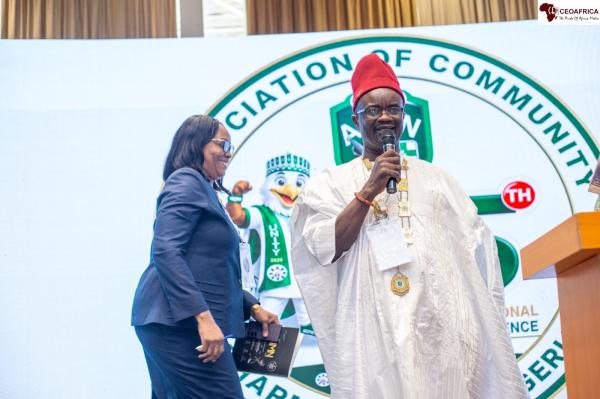




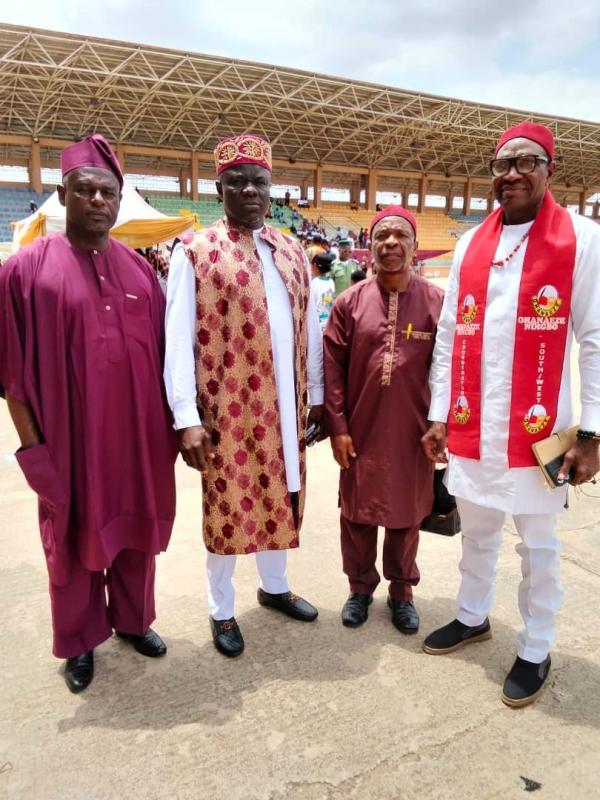
Ado-Ekiti became the epicentre of culture, unity, and political goodwill as governors, traditional rulers, business leaders, and prominent Igbo stakeholders from across Nigeria converged on the Ekiti Parapo Pavilion for the 2026 Igbo Cultural Day Celebration, a landmark gathering that transformed the state capital into a vibrant showcase of heritage, identity, and national integration.
Organised by the Ekiti State Chapter of Ohanaeze Ndigbo Worldwide under the theme, “Celebrating Our Primordial Heritage and Core Values: The Igbo Renaissance,” the event attracted an impressive lineup of dignitaries led by Ekiti State Governor, Biodun Abayomi Oyebanji; Imo State Governor and Chairman of the Progressive Governors’ Forum, Hope Uzodimma; Kogi State Governor, Ahmed Usman Ododo; Ekiti State Deputy Governor, Monisade Christianah Afuye; President of Ohanaeze Ndigbo Ekiti State, Alex Ndubuisi; President of Ohanaeze Ndigbo Worldwide, Oyo State Chapter, Okechukwu Umeh; and a host of traditional rulers led by Eze Nwachukwu.
The attendance of Governors Uzodimma and Ododo elevated the celebration beyond a cultural gathering into a significant demonstration of inter-state solidarity and national cohesion. Their presence reinforced the growing recognition of cultural diplomacy as a powerful tool for fostering peaceful coexistence and strengthening Nigeria's multicultural fabric.
Addressing the gathering, Governor Uzodimma praised Governor Oyebanji's leadership style, describing him as a bridge-builder whose governance philosophy has continued to promote inclusiveness, peace, equity, and broad-based development. He commended the Ekiti governor for creating an environment where every resident, irrespective of ethnic background, can thrive and contribute meaningfully to the state's development.
The atmosphere throughout the event reflected a deep sense of cultural pride as colourful traditional displays, indigenous music, and symbolic rituals underscored the significance of preserving ancestral values in a rapidly changing world. Yet beyond the pageantry, the celebration carried a deeper message: the urgent need to protect cultural heritage while advancing national unity.
Chairman of the occasion, Hon. Okechukwu Umeh, used the platform to deliver a passionate appeal for peaceful coexistence among Nigeria's diverse ethnic nationalities. He stressed that the country's progress depends largely on the willingness of its people to rise above ethnic, political, religious, and cultural differences in pursuit of a shared national destiny.
He also called on Ndigbo across Ekiti State and beyond to actively participate in the ongoing voter registration exercise, describing civic engagement as a fundamental responsibility of every citizen. According to him, voter registration and participation in elections remain indispensable tools for shaping the future of the state and the nation.
Hon. Umeh further commended Governor Oyebanji for his visionary governance and commitment to maintaining a peaceful, secure, and business-friendly environment that has enabled residents from all ethnic backgrounds to flourish. He applauded the government and people of Ekiti State for embracing diversity and creating a society where different cultures coexist harmoniously.
A major highlight of the celebration was the stirring address delivered by High Chief Alex Ndubuisi, who described Governor Oyebanji as a transformational leader whose inclusive governance approach has significantly strengthened relationships among the various ethnic communities residing in the state. According to him, the administration's commitment to fairness and inclusion has ensured that non-indigenes no longer feel like outsiders but as genuine stakeholders in the Ekiti development project.
Ndubuisi emphasized that the celebration was not merely an annual festival but a sacred responsibility tied to the preservation of Igbo civilization, identity, and historical memory. He noted that wherever Ndigbo are found across the world, gathering to celebrate their heritage remains a non-negotiable duty that reinforces their collective destiny and prevents cultural erosion.
Speaking passionately on the need for cultural continuity, he warned that many children raised outside the Southeast are gradually losing touch with their linguistic and traditional roots. He lamented the increasing decline in the use of the Igbo language among younger generations, describing it as one of the greatest threats to the survival of the culture.
According to him, the renaissance of the Igbo nation must begin within the family, where parents consciously teach their children the language, customs, and values inherited from their ancestors. He maintained that cultural festivals such as the Igbo Day Celebration serve as vital platforms for reconnecting young people with their roots and reinforcing the communal values that have sustained the Igbo people for generations.
The emotional peak of the event came when Governor Oyebanji took the podium to address the gathering. Clearly moved by the overwhelming turnout and show of solidarity, the governor expressed profound gratitude to the Igbo community for their unwavering support and immense contributions to the economic and social development of Ekiti State.
Recalling the humble beginnings of the cultural celebration years ago, he contrasted the modest gatherings of the past with the massive crowd that filled the state pavilion, describing the transformation as a testament to the strength and unity of the Igbo community.
Governor Oyebanji assured residents that his administration would continue to provide a secure and conducive environment for businesses and individuals to prosper. He reiterated his commitment to inclusive governance and affirmed that cultural diversity remains one of the state's greatest strengths.
Traditional rulers at the event echoed similar sentiments. Eze Nwachukwu praised Governor Oyebanji for his pan-Nigerian outlook and enduring support for Ndigbo in Ekiti State, noting that his actions have consistently demonstrated genuine acceptance of all ethnic groups as partners in progress.
Representatives of various ethnic nationalities present at the event also expressed solidarity with the Igbo community, emphasizing that while cultural identities should be proudly celebrated, they must also serve as bridges that unite rather than divide Nigerians.
As the celebration drew to a close, Hon. Umeh delivered a powerful message that resonated throughout the pavilion. He called on Ndigbo everywhere to embrace the enduring virtues of hard work, resilience, enterprise, innovation, integrity, and communal solidarity. Warning against the dangers of disunity and self-interest, he stressed that collective progress can only be achieved when communities work together for a common purpose.
He also used the occasion to encourage eligible voters to obtain their Permanent Voter Cards ahead of the forthcoming governorship election in Ekiti State and the 2027 general election describing democratic participation as a crucial instrument for advancing transparency, accountability, and sustainable development.
Despite the challenges confronting the nation, the Ohanaeze leader expressed confidence in Nigeria's future, insisting that unity, perseverance, and responsible leadership would ultimately lead the country toward greater prosperity.
Invoking the timeless Igbo philosophy, “Egbe bere, Ugo bere”—let the eagle perch and let the eagle perch—he reminded Nigerians that true nation-building can only flourish where justice, fairness, equity, and mutual respect prevail.
By the time the curtains fell on the 2026 Igbo Cultural Day Celebration, the event had achieved far more than a celebration of customs and traditions. It had become a compelling symbol of cultural pride, democratic consciousness, peaceful coexistence, and national renewal, leaving participants inspired by the possibility of a stronger and more united Nigeria built on the enduring values of diversity, inclusion, and shared progress.