



The Federal Government has commenced a review of its foreign scholarship and bilateral education agreements as part of efforts to reduce unnecessary expenditure and redirect public resources towards strengthening tertiary institutions in Nigeria.
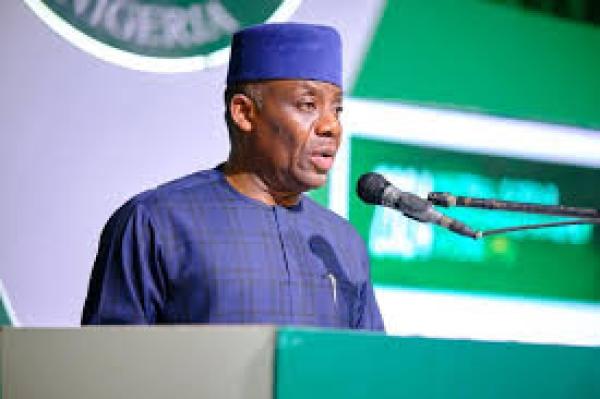
The Minister of Education, Dr Tunji Alausa, said the government could no longer justify spending scarce public funds to send Nigerian students abroad to study programmes already available in local universities, polytechnics and colleges of education.
Alausa disclosed this while explaining the rationale behind the government’s decision to review its overseas scholarship arrangements, stressing that the policy was aimed at building domestic capacity and ensuring greater value for public expenditure.
The minister recalled that shortly after assuming office, he was presented with a proposal involving about 100,000 Nigerian students travelling to Morocco to study programmes taught in English, including mass communication and journalism.
He said the proposal raised concerns because the courses were already available in Nigeria, while the students would have been required to spend their first year learning French before commencing their academic programmes.
“Number one, we have all those courses in Nigeria. And yet, number two, they were going to spend the first year learning French before they started the programme,” Alausa said.
He added that the cost of sponsoring such a large number of students abroad could not be justified when Nigerian tertiary institutions had developed significant capacity over the years.
“And number three, in the position of a few million to support this in Nigeria, we support thousands of them,” he said.
According to the minister, the government consequently concluded that continuing the bilateral education arrangement in its previous form would amount to an inefficient use of public resources.
“So the Bilateral Education Agreement was not making sense, again, to us in government. It was a way to waste government funds,” Alausa said.
He added: “And this President will not waste any public funds.”
The latest policy builds on the Federal Government’s earlier decision to discontinue new government-funded Bilateral Education Agreement scholarships while retaining support for students already enrolled under the previous arrangements.
The government has clarified that existing beneficiaries will not be abandoned and will continue to receive funding until they complete their studies.
The review, however, does not constitute a blanket ban on scholarships offered to Nigerians by foreign governments. Countries willing to sponsor Nigerian students may continue to do so without necessarily requiring financial contributions from the Nigerian government.
“But when you stop the scholarship, you say countries that want to continue to give the scholarship can continue to do that,” the minister explained.
Alausa said the circumstances that necessitated sending large numbers of Nigerian students abroad decades ago had changed significantly.
“When those programmes were set up 20 years ago, they were meant to get students to go to the government colleges where we did not have capacity,” he said.
“But in the last 20 years, we’ve built a number of capacities in the tertiary institutions — universities, polytechnics and colleges,” he added.
The scholarship review forms part of broader reforms by the Federal Ministry of Education aimed at repositioning Nigeria’s education sector under President Bola Ahmed Tinubu’s Renewed Hope Agenda.