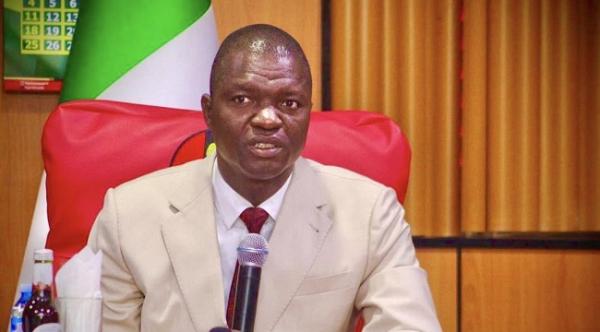





The Acting Executive Secretary of the African Academy of Languages, ACALAN, Dr. Lang Fafa Dampha has restated the importance of harmonization exercise in language promotion and development.
He stated this at the just concluded workshop on the ‘Harmonization of Kinyarwanda/Kirundi, Kiswahili, Luganda, Malagasy and Somali Cross-border Languages’ in Kampala, Uganda.
Dr. Dampha said, “The harmonization exercise is very important because it is one of the fundamentals of language development and promotion activities.
It corresponds to one of ACALAN’s main project called Terminology and Lexicography. We are harmonizing these languages to be able to use them, to avoid people using our languages anyhow they want. Individuals might get up to write our languages the way they want but the harmonized writing systems would produce something that everybody would use because it is endorsed by the government.
“Our national structures are part of the government, also members of the vehicular cross border language commissions whose responsibilities are to develop the language at the grassroots, they come together to ensure we have a harmonized writing system which the government will endorse it. Language harmonization is the root of ACALAN’s work; if you harmonize the writing system of a language then you can go on to do other things with the language."
He added that the Uganda language commission is a very dynamic one while also revealing that the Ugandan government has shown keen interest and is doing everything possible to make culture and language as factors of African integration and development.
“We are here to harmonize the writing systems of five (5) cross border languages, these are Kiswahili, Kinyarwanda/Kirundi, Luganda, Malagasy and Somali vehicular cross-border languages. The harmonization exercise is based on the writing systems of these languages, we want to harmonize differences in orthographic practices, we want to create a common alphabet and writing system for each of the five cross-border languages, we want to evaluate the different principles and the practices of the languages in our societies, we want to develop a standing form of writing for each of the languages so that materials produced in one country can be used in other countries in other to maximize resources and minimize cost. We want to develop harmonized rules of grammar as well and disseminate the harmonized rules to our member states to use them in the education system, meetings, as official languages, etc. That is why we are here today,” he stated.