


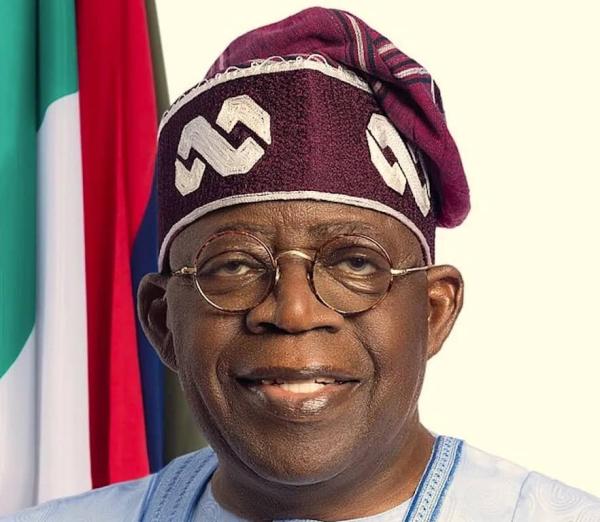
President Bola Tinubu, yesterday, painted a gloomy picture of the security situation in the country, saying terrorism is giving him and other Nigerians sleepless nights.
Tinubu, however, was quick to declare that Nigeria would defeat terrorism and banditry, describing the security threats as unacceptable and alien to the country’s core values.
Speaking while declaring open the Second National Economic Council (NEC) Conference at State House Conference Centre, Abuja, Tinubu assured Nigerians of his administration’s resolve to strengthen the country’s security forces and restore peace across affected communities.
He stated, “I promise you here that I’ll play my part. Seven zones of mechanisation are coming. I promise Nigerians that this will be delivered, and I am here again to further find ways to strengthen our security forces and defeat terrorism.
“That, I promise you, is what has kept all of us sleepless at night, but I assure you we will win with determination and resilience. We will overcome this unacceptable terrorism and banditry. It’s not part of our culture. It’s foreign to us.”
The president described insecurity as an economic hindrance, stressing that all hands must be on deck to find an immediate solution.
He particularly commended the governors of Borno, Katsina and Kaduna states, as well as others, for doing “so much to defend our freedom, liberty and our commonwealth”.
Welcoming governors, ministers, members of the National Assembly, development partners and private sector leaders to the two-day conference, themed, “Delivering Inclusive Growth and Sustainable National Development: The Renewed Hope National Development Plan 2026–2030,” Tinubu described the gathering as a reflection of collective dedication to national progress.
He praised the National Economic Council (NEC), chaired by Vice President Kashim Shettima, for sustaining a vital platform for policy coordination and strategic dialogue.
The president said, “I am pleased to address the second edition of the National Economic Council Conference at a critical moment in Nigeria’s development journey. NEC remains a cornerstone of fiscal federalism and economic governance in our country.”
Highlighting the key achievements of his administration thus far, Tinubu said the economic reforms undertaken since inception had helped stabilise the economy and restore confidence.
“I must say again at this juncture, the monetary policy that we have embarked on since the reforms has yielded positive results and gained recognition around the world,” he stated.
He commended Governor of Central Bank of Nigeria (CBN), Yemi Cardoso, for restoring confidence in Nigeria’s monetary policy.
The president said state and local governments now received increased, more predictable federal allocations, enhancing their capacity to pay salaries, invest in infrastructure, and deliver social services.
He added that infrastructure development across transportation, power, digital connectivity, housing and irrigation had been prioritised.
Tinubu also highlighted expanded social investment and human capital programmes targeting vulnerable households, youth, women and small businesses, alongside grassroots-focused initiatives under the Renewed Hope Agenda.
He stated, “The Renewed Hope Ward Development Project further demonstrates our commitment to grassroots inclusion through a bottom-up approach to national development.
“These successes reflect strong collaboration among the federal and state governments, development partners and the private sector.”
On the Renewed Hope National Development Plan 2026–2030, the president explained that it represent-ed the next phase of Nigeria’s national journey, anchored in inclusive, resilient, and environmentally sustainable growth.
According to him, “The plan prioritises economic diversification and productivity, human capital development, subnational competitiveness based on comparative advantage, private sector-led growth, and climate resilience.
“Its success will depend largely on effective implementation at the state and local government levels, making NEC central to aligning national priorities with subnational realities.
“This Conference has reinforced collaboration, shared accountability and a focus on practical solutions and measurable outcomes. We must move decisively from declarations to implementation through data-driven decision-making, peer learning among states and innovative financing models.”
Tinubu told the conference that while the task before the country was challenging, the opportunity was historic.
He expressed confidence that resolutions from the conference would advance agricultural diversification, including dairy farming, livestock investment, and ranching.
Shettima implored the governors ministers, and other public officials to work towards achieving the kind of inclusive growth and economic progress that trickled down to the everyday lives of Nigerians.
He said the prevailing wisdom among developed economies had moved beyond growth for its own sake to sustainable growth that accommodated all citizens.
The vice president, while delivering his keynote address during the National Economic Council (NEC) Conference, described the two-day confab as a continuation of government’s covenant with the Nigerian people.
He stated, “The inclusive growth on our radar is not an exercise in sloganeering. We have confronted the macroeconomic obstacles before us. What remains is to ensure that progress filters down to the everyday lives of our people. This is precisely why the National Economic Council remains the most suitable vehicle for delivering the promise of inclusive growth.
“Our mission is incomplete if a child born in Lafia does not have the same chance to thrive as one born in Lagos; if the farmer in Makurdi, the entrepreneur in Aba, and the student in Sokoto cannot all find dignity, opportunity, and hope within the Nigerian dream.”
Shettima pointed out that while the NEC conference was a moment to take stock of the tasks ahead, the event also demonstrated the harmonious relationship Tinubu had shared with NEC through the “memorable years of inevitable and transformative reforms aimed at resetting the foundations” of the country’s economy.
He applauded Tinubu for improving Nigeria’s economic fortunes, stating that it would be difficult for anyone to deny the sincerity with which the president “has honoured his promise to insulate the Nigerian economy in a world increasingly shaped by geopolitical tensions and rising economic protectionism”.
On what the conference intended to achieve, Shettima explained that it “presents a unique opportunity to onboard new Governors” and deepen the shared understanding of NEC’s role in shaping Nigeria’s economic destiny.
Among others, he said the two-day retreat sought to “align federal and state strategies with the National Development Plan (2021–2025) and the Nigeria Agenda 2050, especially in poverty reduction, job creation, and social protection”.
Shettima outlined the objectives of the confab to include strengthening collaboration across regions through practical frameworks for inter-regional trade, investment, and infrastructure, and harnessing the comparative advantages of each geopolitical zone.
He said the conference would also explore “pathways for fiscal sustainability at both federal and subnational levels, reforming tax systems and enhancing internally generated revenue without overburdening our people; and to ensure that NEC’s resolutions translate into legislative and executive action that delivers tangible outcomes at federal, state, and community levels”.
The vice president urged participants at the conference “to be bold in thought, courageous in questioning the status quo, and resolute in crafting an implementable roadmap that speaks not just to growth, but to growth that is inclusive, sustainable, and transformative”.
He said, “History will not judge us by what we discuss, but by the clarity of the actions and the impact inspired by such decisions. May this conference mark another step towards a nation that works for all its people.”
Representing Chairman of Nigeria Governors’ Forum, Governor Dapo Abiodun of Ogun State underscored the central role of states in shaping macroeconomic outcomes through investment decisions, tax administration, and service delivery, calling for disciplined and socially legitimate implementation of reforms.
He described NEC as “the engine room of economic leadership, not merely an advisory body”.
Development partners, in their goodwill messages, also reinforced the call for stronger partnerships, advocating closer alignment between government policy direction and enterprise capacity to unlock scalable investments.
Across sessions, delegates agreed that Nigeria’s economic progress would depend not only on federal policy direction but also on coordinated execution at state and community levels, with fiscal discipline, consensus-building and inclusive implementation emerging as dominant themes of the conference deliberations.