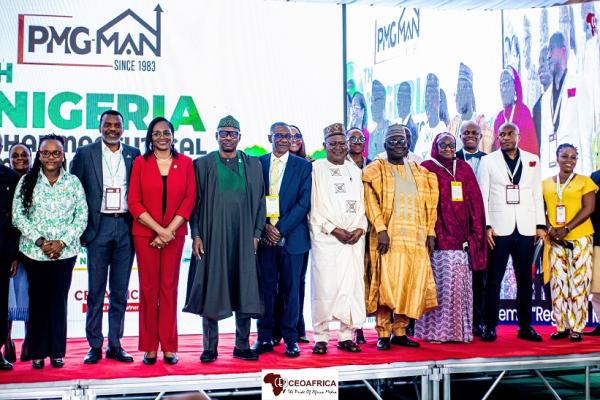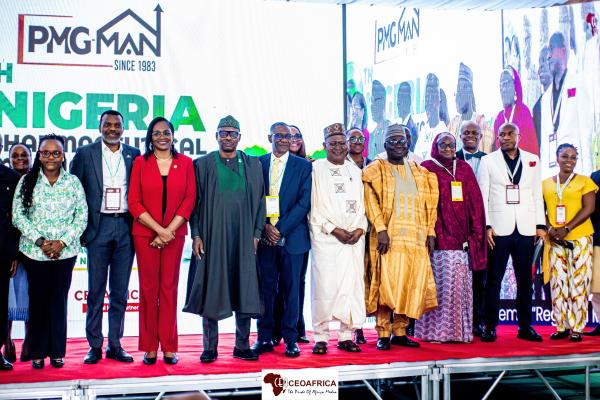




The President of the Pharmaceutical Society of Nigeria (PSN), Pharm. Ayuba Tanko Ibrahim, has lauded the current leadership of the National Association of Industrial Pharmacists (NAIP) for orchestrating what he described as a "strategic reset" of the nation’s pharmaceutical landscape. Speaking as the Chief Host of the 2026 NAIP Economic Outlook and CEOs Forum held at the Lagos Marriott Hotel, Pharm. Ibrahim expressed profound satisfaction with the NAIP National Chairman, Pharm. (Sir) Bankole Ezebuilo, and the association's aggressive drive toward the 2030 mandate for 70% local drug production. In his opening remarks, he noted that while previous administrations laid a solid foundation, the present executive has demonstrated exceptional leadership that will elevate the association to greater heights. "It would be a dream come true if Nigeria can handle the bulk of its pharmaceutical productions," Pharm. Ibrahim declared. "The time for local production is not tomorrow; it is now."
Nigeria’s pharmaceutical sector is on the verge of a major transformation towards self-sufficiency and regional leadership, as stakeholders intensify efforts to strengthen local production and supply chain resilience. This is possible because Nigerians are turning to local innovation and home-grown solutions to secure their future. With a true humanitarian focus and a serious determination to remain self-sufficient, Nigeria’s pharmaceutical sector has always been a gold standard bearer; the nation actually dominates the sector across the region, and its pharmaceutical products are highly regarded as safe and efficacious. However, the COVID-19 pandemic laid bare the depth of vulnerabilities in global logistics. As the world scrambled for essential supplies, Nigerians witnessed the fragility of a system that relied almost entirely on external support. This dependency has drained critical resources, exposed the country to global supply chain fragilities, and left ordinary Nigerians facing high costs and constrained access to care.
The urgency of this transformation was underscored by the Keynote Speaker, Mallam Muhammadu Sanusi II (CON, PhD), the Emir of Kano, who revealed that 70 percent of the drugs used in Nigeria are imported, with 82 percent originating from a single source, India. Describing this concentration as a threat to national security, the Emir called for immediate political support to establish local plants and stabilize the domestic supply chain, pointedly observing that "most of these drugs we import, it is not as if we cannot produce them locally," and emphasizing that local production means faster scale-up during health emergencies. This sentiment was echoed by the Distinguished Chairman, His Royal Majesty Igwe Nnaemeka Alfred Achebe, the Obi of Onitsha, who warned that excessive reliance on external sources places not only public health but also economic sovereignty at risk. He insisted that a self-reliant sector is the "backbone of continental influence," noting that these partnerships mean essential drugs and diagnostics will become faster and cheaper for Nigerians. He added that local production will translate into real benefits at the clinic, stating, "We can bridge global sponsors with local hospitals and communities, ensuring it runs smoothly and ethically."
Patients often spend up to billions of naira a year travelling abroad for care, but today, a bold, government-led reset is underway to domesticate these capabilities. The "Father of the Day," Prince Julius Adelusi-Adeluyi, remarked that the "pharmacy profession is punching below its weight" and urged pharmacists to project more "gravitas" to drive meaningful change. Supporting this call was a historic assembly of authorities, including Hon. Uchenna Harris Okonkwo, Deputy Chairman of the House Committee on NAFDAC; Pharm. Ahmed Babashehu, Registrar of the Pharmacy Council of Nigeria; Prof. Mojisola Adeyeye, DG of NAFDAC; and the College of Past Presidents of the PSN—Pharm. Dr. U. N. O. Uwaga, Pharm. Anthony Akhimien, Pharm. Azubuike Okwor, Pharm. Olumide Akintayo, and Pharm. Mazi Sam Ohuabunwa. They were joined by Mr. Peter Obi, who argued that every naira spent in this sector is a direct investment in national prosperity.
The industrial backbone was represented by manufacturing leaders including Dr. Okey Akpa (President of FEAP), and CEOs including Dr. Ifeanyi Okoye (Juhel), Prince Bertrand Ugwu (Nemel), Chris Ukachukwu (Rexton), Uche Anyaegbunam (Chez Resources), Patrick Ajah (May & Baker), and Tosin Jolayemi (Daily Need). Managing Directors from Jawa, Shalina, Evans, Pharmacy Plus, and Sylken (Nature’s Field) also signaled total commitment to the 2030 mandate. While acknowledging persistent challenges such as high production costs and inadequate infrastructure, National Chairman Pharm. (Sir) Bankole Ezebuilo stressed that self-sufficiency could be achieved through policy consistency and "Patient Capital." He asserted that medicines are "strategic assets" and noted that by collaborating today on local manufacturing, the industry will build a healthcare sector that not only keeps Nigerians well but also drives shared prosperity.
Expressing appreciation at the close of the session, the NAIP National Chairman specially commended the Chairman of the Conference Planning Committee (CPC), Pharm. Ameh Eghomwanre, and his dedicated team for the summit’s success, while also recognizing the invaluable contributions of NAIP’s zonal structures. In his closing remarks, Pharm. Ayuba Tanko Ibrahim reiterated that the ultimate goal remains the total security of the Nigerian patient. He emphasized that the momentum generated must be sustained as the association moves toward the 2026 Annual National Conference in Kwara this May. As Chairman Ezebuilo concluded, "We are industry architects. With our royal fathers and elders watching, excuses have lost their confidence. The time for local production is now.