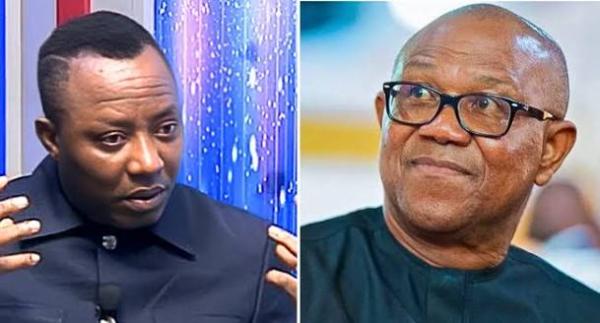



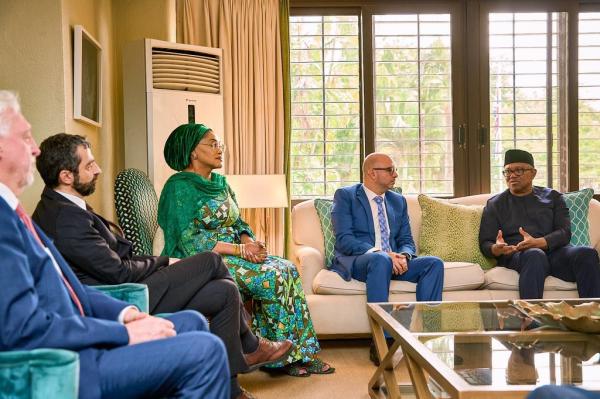
Peter Obi, former presidential candidate of the Labour Party and a prominent figure within the African Democratic Congress, on Wednesday held a high-level breakfast meeting with diplomats from key foreign missions in Abuja, in a move widely seen as part of ongoing political consultations ahead of the 2027 general elections.
The meeting brought together the British High Commissioner to Nigeria and senior envoys from the embassies of Germany, Canada, and France, alongside representatives of the European Union. The engagement provided a platform for discussions on Nigeria’s socio-economic outlook, governance, and the evolving political landscape as the country approaches another election cycle.
Details of the closed-door session were shared by Obi via his official account on X, where he described the interaction as “productive” and “enriching.” According to him, the talks focused on strengthening bilateral relationships and fostering cooperation between Nigeria and its international partners.
The meeting comes on the heels of recent developments within the opposition space, particularly following the African Democratic Congress (ADC) national convention in Abuja. Political observers note that Obi’s engagement with Western diplomats signals a strategic effort to consolidate alliances and reinforce his position as a key opposition figure.
Sources familiar with the discussions indicated that the dialogue centred on issues of mutual interest, including Nigeria’s current economic realities and the need to deepen international collaboration. Obi reiterated Nigeria’s openness to meaningful partnerships, stating that such engagements must “deliver value to our people.”
The development has attracted considerable attention within political and diplomatic circles, especially amid shifting alignments ahead of the 2027 elections. Images from the meeting, shared by Esther Umoh, Obi’s campaign photographer, further underscored the significance of the engagement.
The timing of the meeting has also fueled public discourse, coming shortly after concerns raised over security advisories by the United States, including the evacuation of non-essential personnel from its Abuja embassy. Analysts suggest that Obi’s interaction with top Western diplomats may be interpreted as a demonstration of sustained international interest and confidence in his political outlook.
Reactions on social media have been mixed but largely reflective of the broader political sentiment. Some commentators view the engagement as a positive indication of diplomatic goodwill, while others see it as part of broader pre-election positioning.
Political analysts maintain that the meeting underscores Obi’s continued relevance in Nigeria’s political landscape. By engaging with representatives of major Western nations, he appears to be reinforcing his commitment to international cooperation, governance reforms, and economic development.
As political activities gradually intensify ahead of 2027, such engagements highlight the growing importance of diplomacy and global partnerships in shaping Nigeria’s future trajectory.