




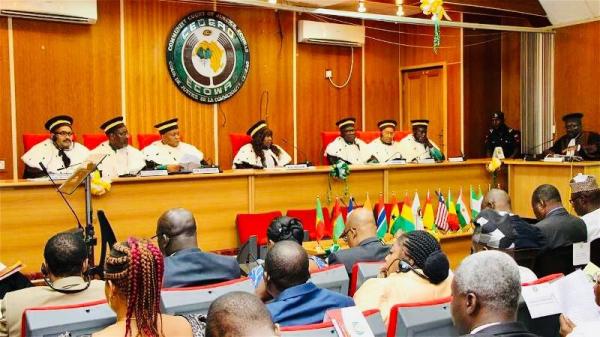
Senior lawyers have asked the Federal Government to quickly obey the recent judgement of the ECOWAS Court of Justice ordering Nigeria to reduce overcrowding in correctional centres.
According to them, prison congestion is mainly caused by slow court processes, prolonged detention without trial, abuse of remand orders and poor access to legal representation. They warned that if urgent action is not taken, correctional centres may become places that worsen crime instead of helping offenders reform.
The ECOWAS Court ordered Nigeria to reduce prison overcrowding by introducing policies that support faster trials and alternatives to imprisonment for minor offences.
The court directed the government to:
Regularly review cases involving prolonged detention.
Introduce and implement a prison decongestion policy.
Use non-custodial punishments such as community service, probation and parole for minor offences.
Submit a progress report within six months showing how many inmates have been released or tried.
The case was brought by the Centre for Community Law, which argued that many inmates remain in detention for years without trial.
Using 2024 prison data, the organisation stated that out of 79,237 inmates across Nigeria:
26,718 had been convicted.
52,519 were awaiting trial.
This means almost two-thirds of inmates had not been convicted.
The group also argued that many detainees remained in custody for offences that qualify for bail and that some had spent longer in detention than the punishment attached to their alleged offences.
Although the government challenged the case and questioned the statistics, the court ruled that the organisation had the legal right to file the action and accepted the data as credible.
The court held that prolonged detention and prison overcrowding violate basic rights, including:
Right to liberty
Human dignity
Fair hearing
Presumption of innocence
Trial within a reasonable time
Equal treatment before the law
Lawyers said prison congestion shows deeper problems in Nigeria’s justice system.
Public interest lawyer Dr Abdul Mahmud said prison should not always be the first option for minor offences and that non-custodial sentences promote fairness and respect human dignity.
Senior lawyer Emmanuel Ekwe agreed but stressed that serious crimes such as violence, corruption and offences threatening public safety should still attract prison terms.
Dauda BaAdama said many poor Nigerians remain in detention because they cannot afford legal services or meet strict bail conditions.
Onesimus Ruya said society must move away from the belief that justice only means sending people to prison. According to him, options like community service can punish offenders while also helping rehabilitation.
Human rights groups and legal organisations have also called for reforms to reduce prison congestion.
The lawyers said lasting change will depend on faster court processes, stronger investigations, improved legal aid and wider use of alternatives to imprisonment.