



Kenyan authorities have confirmed the country’s first case of Ebola Bundibugyo virus disease (BVD).
Bundibugyo virus disease is a severe type of Ebola virus that spreads through direct contact with the blood or body fluids of an infected person or contaminated materials.
There are currently no approved vaccines or specific treatments for the disease, although some products are being evaluated in clinical trials.
The World Health Organization (WHO) said on Tuesday that the virus was imported by a Kenyan citizen who had been living in the Democratic Republic of the Congo (DRC), where the patient fell ill and received treatment at several health facilities.
The patient was said to have travelled by road from the DRC to Kampala, Uganda, through Beni on October 2, before flying to Nairobi the following day.
On arrival in Kenya, the patient was taken to a hospital in Nairobi and isolated.
Samples tested positive for Bundibugyo virus at the National Virology Reference Laboratory and the Kenya Medical Research Institute.
The patient died on the night of October 5 despite supportive care and was buried on October 6 in line with Kenya’s Ebola safe and dignified burial protocol.
Kenya notified the WHO of the case on October 6 in accordance with the International Health Regulations (2005).
The WHO said it is working with the Kenyan government to strengthen response measures, including case investigation, contact tracing, surveillance and screening at high-risk points of entry.
Health authorities have so far listed 28 contacts, including family members and health workers who cared for the patient.
They are also tracing 23 passengers and four crew members who were on the same flight as the patient, with arrangements being made for follow-up and quarantine of people considered at risk.
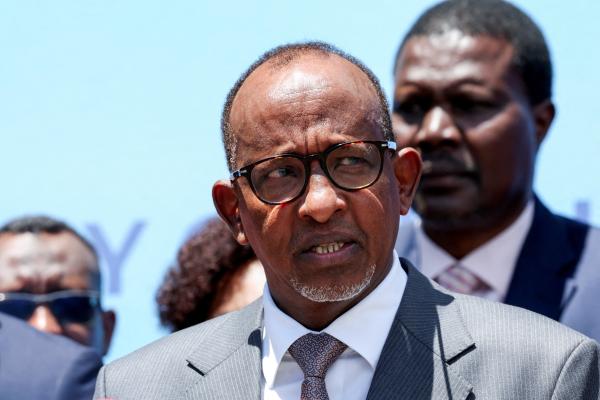
Mohamed Janabi, WHO regional director for Africa, said Kenya has put important outbreak control measures in place
“The priority now is to move swiftly to detect any further cases before the virus has an opportunity to spread” Janabi said.
Kenya is the fourth country to confirm BVD.
The DRC is currently responding to an ongoing outbreak, while Uganda ended its latest outbreak in August 2026. Most of the cases in Uganda were imported from the DRC, with a few locally acquired among contacts and health workers linked to imported cases.
France also reported a travel-related case of BVD in June 2026.
WHO said Kenya has been on high alert since May following outbreaks in the DRC and Uganda.
As of October 6, Kenya had screened more than 652,000 travellers entering the country, tested 267 suspected samples and trained about 5,000 health workers on Ebola prevention and management.
The UN agency said it has supported Kenya’s Ministry of Health and National Public Health Institute with Ebola simulation exercises, training for rapid response teams and the assessment of isolation units in 27 high-risk counties.
The WHO has also provided about 1,000 Ebola tests and 1,000 personal protective equipment kits to high-risk counties.
The country’s Ebola preparedness score, which measures readiness in areas including surveillance, laboratory testing, isolation facilities and trained response teams, increased from 66 percent in May to 82 percent in July 2026.
WHO advised against imposing travel or trade restrictions on the DRC, Uganda or Kenya based on available information.