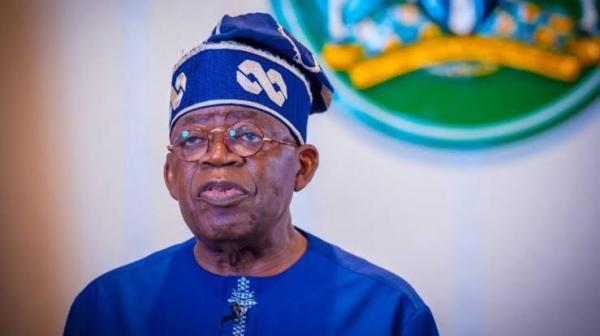



President Bola Tinubu has declared that his administration’s economic reforms are changing Nigeria’s longstanding narrative of economic underperformance, expressing confidence that the policies will unlock the country’s potential and deliver sustainable prosperity.
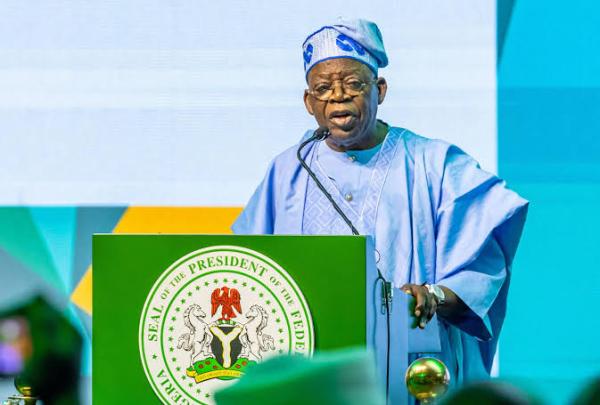
Tinubu, represented by Vice-President Kashim Shettima, stated this on Monday at the 32nd Nigerian Economic Summit in Abuja, where he highlighted the government’s efforts to tackle structural economic challenges and establish a stronger foundation for national development.
The President described the reforms as difficult but necessary decisions, insisting that sustainable economic growth could not be achieved through shortcuts.
“There is no shortcut to economic growth,” he said, adding that the administration had embarked on a fundamental economic reset to reverse decades of performance below the country’s potential.
“We came to rewrite the story of a nation that has performed below its potential for far too long,” Tinubu said.
He explained that the reforms were aimed at removing longstanding barriers to growth, strengthening productivity, attracting investment and creating opportunities for Nigerians across various sectors.
According to him, the success of the economic agenda would ultimately be measured by its impact on citizens’ livelihoods rather than economic statistics alone.
“For us, rescuing the economy means rescuing livelihoods and transforming the fortunes of young jobseekers, farmers, manufacturers, entrepreneurs and innovators,” he said.
Tinubu stressed that economic stability was crucial to maximising the opportunities offered by Nigeria’s growing population and abundant human and natural resources.
He said the government was creating conditions for businesses to expand, investors to commit capital and enterprises to generate productive employment.
“These reforms are restoring confidence, strengthening our economic foundations and laying the groundwork for sustainable growth,” he said.
The President, however, noted that sustaining the gains would require stronger productivity, better employment opportunities and more effective utilisation of the nation’s workforce.
“Our pursuit of prosperity demands greater productivity from every worker, enterprise and investment,” he said.
He urged policymakers to assess infrastructure projects by the economic activities they generate and evaluate the education system by the skills and productivity it delivers.
“We must judge infrastructure by the economic activity it generates and education by the skills and productivity it delivers,” Tinubu added.
He also called for industrial policies that would improve the competitiveness of Nigerian businesses, encourage technological innovation, expand exports and create employment.
Citing data from the National Bureau of Statistics (NBS), the President said Nigeria’s real Gross Domestic Product grew by 3.89 per cent in the first quarter of 2026, compared with 3.13 per cent in the same period of 2025.
He disclosed that non-oil activities accounted for 96.08 per cent of the country’s GDP, while the manufacturing sector grew by 3.29 per cent and the oil sector recorded a 2.57 per cent expansion.
Tinubu said the figures reflected progress in the administration’s economic recovery programme and its drive to diversify the economy.
He further disclosed that capital importation into Nigeria reached $10.37 billion in the first quarter of 2026, representing an 83.83 per cent increase over the corresponding period in 2025.
The President attributed the inflows to portfolio and foreign direct investments, assuring that the government would continue to improve the investment climate through regulatory reforms, transparency, policy consistency and expanded access to finance.
He added that the administration’s tax reforms were designed to establish a modern and equitable system that could finance development while providing greater certainty for businesses.
Tinubu also reaffirmed the government’s commitment to fiscal discipline and strategic investments in energy, agriculture and solid minerals, alongside electricity market reforms aimed at improving power supply and attracting investment across the value chain.
Earlier, United Nations Deputy Secretary-General Dr Amina Mohammed called for the urgent consolidation and stabilisation of the economic reforms introduced by the Tinubu administration.
Mohammed emphasised the importance of managing expectations among citizens and other stakeholders while ensuring that the reforms produce sustainable development outcomes.
She also commended the African Development Bank (AfDB) for its new financial architecture for development across Africa, particularly its focus on financing programmes designed to deliver measurable impact.
With the administration highlighting improvements in economic growth and capital inflows, the challenge ahead remains translating these gains into better living conditions, stronger purchasing power, productive employment and broader economic opportunities for Nigerians.