




The Federal Government has approved a monthly transport allowance of N70,000 for public servants for six months, beginning in November 2026, to cushion the effects of rising living costs on workers.
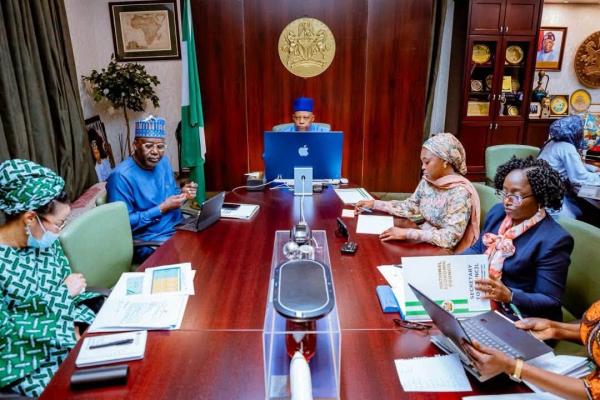
The approval followed a conciliation meeting between the government and the Nigeria Labour Congress (NLC) in Abuja on Tuesday, October 27, where both parties discussed workers’ welfare, outstanding allowances and unresolved labour agreements.
The government also approved the payment of outstanding peculiar allowance arrears, effective from May 1, 2026, in three equal monthly instalments beginning in November.
However, both parties failed to reach an agreement on the effective date for implementing the national minimum wage, prompting a resolution to immediately constitute a Minimum Wage Negotiation Committee comprising representatives of the government, workers and employers.
The resolutions were contained in a memorandum of understanding signed by the Director-General of Budget, Timi Yakubu; NLC President, Joe Ajaero; the Permanent Secretary, Service Welfare Office, Office of the Head of the Civil Service of the Federation, Dr Garba Abdul S.U.; and the Minister of Labour and Employment, Dr Muhammad Maigari Dingyadi.
Confirming the outcome of the meeting, NLC Assistant Secretary-General, Chris Onyeka, described the discussions as productive but said the outcome did not fully meet labour’s expectations.
“It was productive, but not as we had expected,” Onyeka said.
He noted that negotiations often involved compromises, adding, “Sometimes you win some, lose some.”
According to the memorandum, the N70,000 monthly transport intervention would be paid across all levels of the public service for six months, starting in November. However, the document did not specify the exact payment dates or the administrative arrangements for disbursement.
The intervention comes amid continuing concerns over rising transportation costs and the prices of essential goods following the removal of the petrol subsidy in May 2023.
Organised labour has consistently demanded improved wages, lower living costs and the implementation of outstanding agreements to ease the economic pressure on Nigerian workers.
On the national minimum wage, the memorandum confirmed that the parties would immediately establish the negotiation committee and commence discussions without delay.
However, it acknowledged that disagreements persisted over the effective date of implementation.
The national minimum wage was increased from N30,000 to N70,000 in 2024 following negotiations between the Federal Government and organised labour, with the new rate subsequently enacted into law.
The latest resolution did not clarify the specific proposal under consideration in the current discussions or indicate when the disagreement over the implementation date would be resolved.
The government also approved the payment of outstanding peculiar allowance arrears, with disbursement scheduled to begin in November in three equal monthly instalments. The total amount involved and the individual payment breakdown were not disclosed.
For health workers, the government agreed to clear 19 months of outstanding allowance arrears within three months, beginning in December 2026.
The memorandum did not specify the total value of the arrears or the exact dates for the payments.
On the proposed adjustment to the Consolidated Health Salary Structure (CONHESS), the National Salaries, Incomes and Wages Commission (NSIWC) pledged to complete an updated assessment of the cost implications within three weeks.
The assessment is expected to guide the Presidential Committee on Salaries in considering the proposed adjustment. No final decision has been announced.
The memorandum further stated that the Federal Ministry of Agriculture and Food Security had submitted the list of beneficiaries and the cost implications of hazard allowances for agricultural officers to the NSIWC for verification.
The verification exercise is expected to be completed within two weeks, after which the commission will issue an implementation template.
On tax relief for workers, the parties agreed to refer the matter to the National Economic Council (NEC) for consideration, citing the statutory nature of taxation. The memorandum did not specify the proposed relief measures or when the issue would be considered.
The agreement also urged state and local governments to participate in the intervention process, while encouraging unions to pursue the implementation of the resolutions.
Both parties agreed to reconvene after one month to review progress on the implementation of the agreed measures.
The meeting followed an earlier conciliation session held on October 22, 2026, convened by the Federal Ministry of Labour and Employment to address disagreements between the government and organised labour.
While the latest resolutions provide some financial relief for public servants, major issues remain unresolved, including the effective date for implementing the national minimum wage, the proposed CONHESS adjustment, agricultural officers’ hazard allowances and tax relief.
The one-month review is expected to provide an opportunity for both parties to assess progress and determine the next steps in addressing workers’ demands amid persistent economic pressures.