



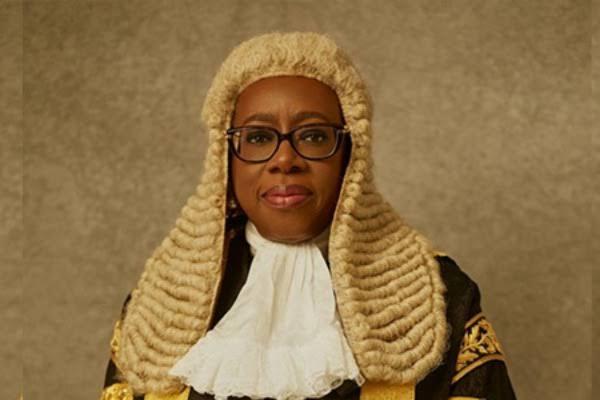
The Chief Justice of Nigeria (CJN), Justice Kudirat Kekere-Ekun, has sworn in members of the Election Petition Tribunals ahead of the 2027 General Elections, charging them to uphold judicial independence and resist all forms of political interference.
The ceremony, held at the Body of Benchers Auditorium in Abuja, also featured the launch of the second edition of the Judicial Electoral Manual and a specialised capacity-building workshop for judicial officers.
Addressing the newly sworn-in judges, Kekere-Ekun emphasised the importance of impartiality, integrity and strict adherence to constitutional provisions in the adjudication of electoral disputes.
She urged the judicial officers to remain committed to their oaths of office, warning them against external pressures capable of undermining public confidence in the Judiciary.
The CJN disclosed that the Presidential and National Assembly elections would hold on January 16, 2027, while the Governorship and State Houses of Assembly elections are scheduled for February 6, 2027.
She stressed that election petition matters require exceptional diligence and efficient case management, given the strict constitutional and statutory timelines governing their determination.
According to her, tribunal judges must avoid unnecessary delays and ensure that electoral disputes are resolved promptly without compromising the quality of judicial decisions.
Kekere-Ekun also cautioned legal practitioners, political parties, media organisations and members of the public against unethical conduct, particularly the misuse of ex parte applications and online campaigns intended to influence pending cases or intimidate judicial officers.
She noted that safeguarding electoral integrity requires the commitment of all stakeholders, including INEC, security agencies, political parties and the legal community.
However, she maintained that the Judiciary must remain within its constitutional mandate by determining electoral disputes strictly on the basis of applicable laws and evidence presented before the courts.
Meanwhile, the Chairman of the Independent National Electoral Commission (INEC), Professor Joash Amupitan, has described election petition tribunals as essential institutions for preserving democratic stability and strengthening public confidence in the electoral process.
Speaking at the three-day workshop for justices and tribunal members in Abuja, Amupitan highlighted the importance of cooperation between electoral administrators and the Judiciary in ensuring credible elections and effective resolution of post-election disputes.
He explained that election tribunals provide constitutional avenues for addressing electoral grievances, preventing political tensions from escalating and reinforcing adherence to the rule of law.
The INEC chairman further drew attention to the growing influence of technology on electoral processes and the emerging challenges facing judicial adjudication.
He noted that although the Bimodal Voter Accreditation System (BVAS) and the INEC Result Viewing Portal (IReV) have strengthened transparency in elections, developments in digital technology have created additional complexities for election petition proceedings.
Amupitan particularly identified artificial intelligence-generated deepfakes and digital misinformation as emerging threats that could complicate the assessment of electoral evidence and distort public understanding of election outcomes.
He stressed the need for judicial officers to acquire the technical competence required to evaluate digital evidence and address technology-related disputes effectively.
With preparations for the 2027 general elections gaining momentum, the inauguration of the tribunal judges and the accompanying capacity-building programme highlight the Judiciary's central role in protecting democratic institutions.
The ultimate test, however, will be the ability of the electoral justice system to deliver timely, impartial and credible judgments, ensuring that political power is determined not only through the ballot but also protected by the rule of law.