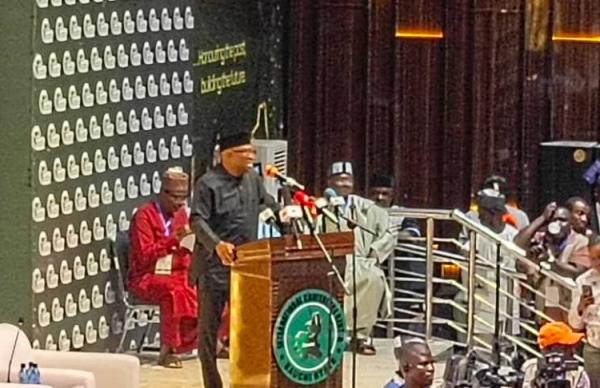





The African Academy of Languages, ACALAN has developed a management structure for the linguistic atlas of Africa. This was achieved at the Workshop for Cartographers and Demographers for the Linguistic Atlas of Africa (Ecowas region) which was held recently in Abidjan.
Speaking at the end of the workshop, the Executive Secretary of ACALAN, Dr. Lang Fafa Dampha stated that the linguistic atlas is been implemented according to regional economic communities.
He said, "We have divided the operations among regional economic communities, we operate here then we replicate what we have done here to other economic communities.
"We are here to bring together the cartographers, demographers from the 15 member states of ECOWAS and the Islamic Republic of Mauritania to present the language situations in their respective countries and the cartographers use the information gotten from the demographers to start developing prototype maps.
"Basically, what we have achieved here is that we have successfully developed the management structure of the linguistic atlas. From top we have the ACALAN Secretariat, the Continental Advisory Board, Continental Scientific and Technical Committees, Regional Co-coordinating Committees, and the National Coordinators."
He added that the role of the Continental Advisory Board is to consider the work of ACALAN and give advice in implementing the project. While the Continental Scientific and Technical Committees have the responsibility of coordinating, drawing the terms of reference and impetus to the project and identify priority areas while also supervising the running of the project.
He further noted that the Regional Coordinating committees carry out the functions of the Scientific Committees and Coordinating committees but on a regional basis. Whereas the National Coordinating committees operate at the national level to coordinate the activities of the linguistic atlas in the various states, they comprise of the linguists, national structures, members of the vehicular cross border language policies, cartographers, demographers, statisticians, civil societies, organizations that are dealing with languages.