




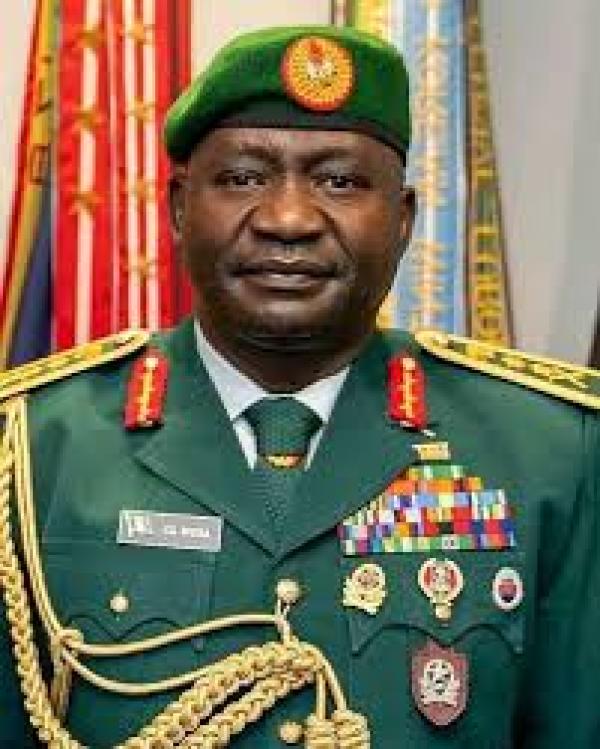
Nigeria’s Minister of Defence, General Christopher Musa, has declared that there should be no negotiation or ransom payment to terrorists, insisting that such practices only strengthen criminal groups and prolong insecurity.
During his ministerial screening at the Senate, Musa warned that paying ransoms allows terrorists to regroup, re-arm and launch new attacks. He said communities that previously negotiated with criminals still suffered attacks afterward. According to him, Nigeria’s banking system has the capacity to trace suspicious financial flows if the right tools are fully activated.
Musa emphasised that military action alone cannot defeat insecurity, noting that kinetic operations contribute only about 25–30 percent of the overall effort. He identified poverty, illiteracy, weak governance and ineffective local government structures as factors feeding criminal networks. He called on state and local administrators to take responsibility for intelligence gathering and early intervention, stressing that security agencies cannot carry the entire burden alone.
He expressed concern about Nigeria’s slow judicial process, especially in terrorism and kidnapping cases that drag on for years. Musa recommended urgent legal reforms, including special courts for terrorism, stricter penalties and accelerated hearings to strengthen national security efforts.
The new minister warned that renewed criminal activity is emerging across maritime corridors linking Akwa Ibom to Cameroon, including sea robbery, piracy and coastal kidnappings. He confirmed that Operation Delta Safe is expanding into areas that were previously calm but now show signs of infiltration.
Musa also demanded a total ban on illegal mining, describing it as a major funding source for armed groups operating within forest regions.
He announced plans to reduce routine military checkpoints nationwide, allowing more troops to return to field operations in forests and ungoverned spaces. Restoring safe access to farmlands, he said, remains a top priority because food security is a key element of national stability.
“A hungry man is an angry man. Protecting farmers means protecting the nation,” he stated.
Musa revealed that more than 70,000 Nigerians apply for military recruitment yearly, but many resist deployment to conflict zones. He stressed that a unified national database would help verify identities, eliminate recruitment fraud and improve the tracking of criminals across states.
He described Nigeria’s fragmented data systems as a serious obstacle, noting that separate databases held by immigration, quarantine and other agencies create loopholes exploited by terrorists, kidnappers, cybercriminals and illegal miners. He urged the creation of a single national database to streamline tracking, disable bank accounts linked to crime and boost intelligence work across agencies.
The House of Representatives adopted extensive national security reform resolutions following a special three-day debate. Members called for open and transparent prosecution of all terrorism-related cases, saying this would help reduce violent crimes and restore public trust.