



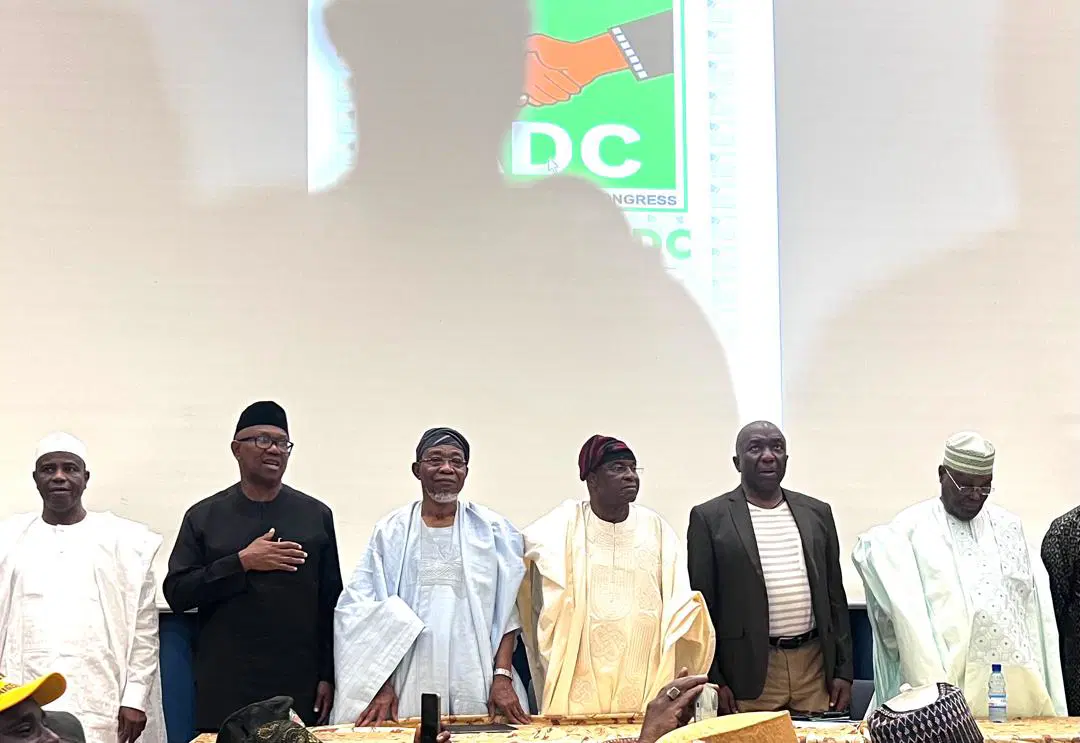
The Independent National Electoral Commission (INEC) has remained silent following allegations by the African Democratic Congress (ADC) that it is deliberately obstructing the party from fielding candidates in the 2027 general elections.
The commission also did not respond to a 72-hour ultimatum issued by ADC youths, who demanded the reversal of INEC’s refusal to recognise the Senator David Mark-led National Executive Committee (NEC), warning of nationwide protests if their demands are not met.
This development coincided with claims by the media office of Peter Obi, the Labour Party’s 2023 presidential candidate, alleging a coordinated effort by the All Progressives Congress (APC) to prevent him from appearing on the 2027 presidential ballot.
In response, Abimbola Tooki, Special Adviser on Media and Communication Strategy to APC National Chairman Nentawe Yilwatda, dismissed the allegations, insisting that the ruling party has no involvement in Obi’s political challenges and urging him to resolve internal party issues.
ADC alleges “administrative landmines”
In a statement by its National Publicity Secretary, Bolaji Abdullahi, the ADC accused INEC of creating “deliberate administrative landmines” aimed at excluding the party from the electoral process.
The party argued that INEC’s decision to suspend correspondence with it—pending the outcome of a case before the Federal High Court—conflicts with statutory timelines outlined in the Electoral Act. These include mandatory notice periods and submission deadlines required for candidate nominations.
According to the ADC, INEC had previously monitored its July 29, 2025 NEC meeting, documented proceedings, and updated its records to reflect a new leadership structure, including David Mark as National Chairman and Rauf Aregbesola as National Secretary.
The party further cited INEC’s sworn affidavit in a related court matter, which, it said, acknowledged the leadership transition and affirmed that such internal party matters fall outside judicial interference.
Despite this, ADC maintained that INEC’s current refusal to engage with the party effectively prevents it from meeting the commission’s own deadline of May 10 for submission of required documents—thereby risking disqualification from the elections.
The party warned that this situation creates “a clear pathway to artificial non-compliance” that could be used to justify excluding it from the ballot.
Obi’s camp alleges political interference
Separately, Peter Obi’s media office, through spokesman Ibrahim Umar, alleged a sustained effort to weaken Obi politically by destabilising the Labour Party and influencing electoral processes.
The statement claimed that recent legislative amendments and actions by INEC were targeted at undermining Obi’s potential candidacy, particularly following his alignment with an ADC coalition.
It also alleged that judicial interventions and internal party crises were part of a broader strategy to limit opposition participation and create conditions for a one-party system.
APC dismisses claims
Rejecting the allegations, APC representatives argued that the party cannot be held responsible for internal disputes within opposition parties.
Tooki stated that INEC’s guidelines apply equally to all parties and advised Obi and his allies to focus on resolving their internal challenges rather than blaming the ruling party.
ADC youths issue ultimatum
Meanwhile, the ADC youth wing, led by Balarabe Rufa’i, accused INEC of unconstitutional interference in party affairs and demanded immediate recognition of the David Mark-led leadership.
The group warned that failure to comply within 72 hours would trigger coordinated, peaceful protests across all 36 states and the Federal Capital Territory.
They also called for the resignation or removal of the INEC Chairman, alleging that recent actions have undermined the commission’s credibility and threatened Nigeria’s democratic process.
Civil society raises concerns
The Civil Society Legislative Advocacy Centre (CISLAC), through its Executive Director Auwal Rafsanjani, criticised INEC’s handling of the situation, warning that it could erode public trust and destabilise the electoral system.
Rafsanjani emphasised that Nigeria’s democracy depends on a functioning multi-party system and cautioned against any actions that could exclude political parties from participating in elections.
He urged INEC to adhere strictly to constitutional provisions and ensure a transparent, fair, and inclusive electoral process to maintain credibility both domestically and internationally.