


A leading global biopharmaceutical executive, Henrietta Ukwu, has issued a powerful call for Nigeria to urgently end its overwhelming dependence on imported medicines, describing the country’s estimated 70 percent reliance on foreign drugs as both “worrisome and unfortunate.”
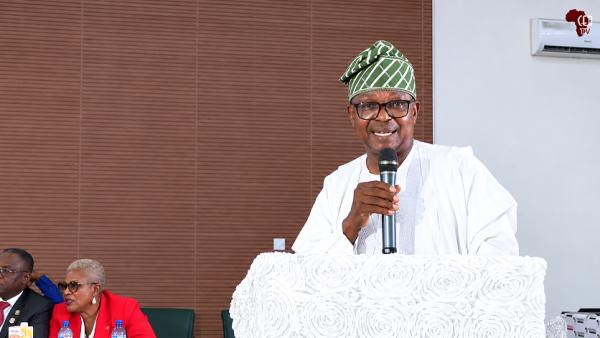
Delivering a compelling keynote address at the 29th Annual National Conference of the Association of Industrial Pharmacists of Nigeria in Ilorin, Kwara State, Dr. Ukwu challenged the Federal Government under President Bola Ahmed Tinubu to aggressively deepen support for local pharmaceutical manufacturing as a strategic pathway to national health security, economic prosperity, and industrial independence.
Her keynote lecture, titled “Nigeria’s Pharmaceutical Industry as a Pillar of National Health, Wealth, and Security,” aligned with the conference theme: “Collaboration and Innovation to Build Local Solutions for the Future of the Nigerian Pharmaceutical Industry.”
Speaking passionately before an elite gathering of pharmaceutical leaders, policymakers, researchers, and industrial stakeholders, Ukwu declared that Nigeria cannot continue to rely on foreign nations for medicines, vaccines, and essential medical products if it truly seeks sovereignty in healthcare delivery.
“Health is Wealth,” she emphasized, insisting that local manufacturing of pharmaceuticals, vaccines, and medical devices remains the surest route to medicine security and sustainable national development.
According to her, any nation that remains heavily dependent on imported healthcare products risks falling behind in the global economic and healthcare landscape.
Ukwu noted that Nigeria possesses abundant natural and human resources capable of driving a globally competitive pharmaceutical industry but lamented that these advantages remain largely underutilized.
“We have incredible expertise and all it takes to move the pharmaceutical industry forward, but we are not fully harnessing the natural resources Nigeria is endowed with. The Federal Government is making efforts and progress is being recorded, but there is still significant room for improvement,” she stated.
She advocated a comprehensive industrial transformation strategy anchored on sustainable technologies, infrastructure development, manufacturing excellence, capacity building, stable electricity, water supply, and an enabling business environment.
Despite existing obstacles, Ukwu maintained that many of the industry’s current challenges are actually stepping stones toward long-term transformation and self-reliance.
“Number one is the issue of importation of drugs into this country. How do we do that? By investment,” she said.
She explained that stronger regulatory guidance and investor confidence would naturally stimulate local pharmaceutical production and reduce the country’s dependence on imported medicines.
“When investors see that manufacturers are meeting world standards, they will put their money into the industry, and this will boost the production of pharmaceutical products in Nigeria,” she added.
Her position was strongly reinforced by the National Chairman of NAIP, Bankole Ezebuilo, who warned that no nation can outsource its healthcare security and survive sustainably.
“No nation can outsource its health security, and no sector can thrive in isolation,” Ezebuilo declared.
He stressed that the pharmaceutical industry must move beyond fragmented efforts toward a fully integrated ecosystem driven by innovation, collaboration, and local solutions.
“Doing more of the same will not take us where we need to go,” he cautioned.
Lamenting the alarming scale of import dependency, Ezebuilo questioned the future implications of a country where over 70 percent of medicines consumed are sourced externally.
“A nation that cannot produce its own medicines is a nation negotiating with its health, and negotiation is not where you want to be when lives are at stake,” he said.
He called on the Federal Government to establish stronger enabling policies while urging academia to align research with industrial realities and practical pharmaceutical needs.
The Chairman of the Conference Planning Committee, Theophilus Emeka, also appealed for greater unity and collective action among stakeholders to build a resilient pharmaceutical future for Nigeria.
While acknowledging the severity of Nigeria’s current dependence on imported drugs, Ukwu commended President Tinubu’s Renewed Hope Agenda and the Presidential Initiative for Unlocking the Healthcare Value Chain (PVAC), which aims to increase local pharmaceutical manufacturing capacity to 70 percent by 2030.
According to her, the initiative has the potential to transform Nigeria into Africa’s leading pharmaceutical manufacturing and export hub.
However, she emphasized that achieving true pharmaceutical independence requires far more than simple packaging operations or “fill-and-finish” manufacturing models.
Instead, she advocated for robust partnership-driven investments in the local production of Active Pharmaceutical Ingredients (APIs), advanced formulations, and sustainable industrial ecosystems.
To illustrate the possibilities, Ukwu highlighted several groundbreaking collaborations already shaping the future of local manufacturing. These include the partnership between the International Finance Corporation (IFC) and Fidson Healthcare Plc to develop local API manufacturing capacity, the European Union-backed ELMiN partnership, the France-supported Qualimed Project, and Nigeria’s technical cooperation agreement with Brazil on pharmaceutical production.
She also referenced major industrial milestones such as the nearing completion of Emzor Pharmaceutical Industries Limited’s API plant in Sagamu, Ogun State, targeted at anti-malarial API production.
Additionally, she praised collaborative efforts involving the National Institute for Pharmaceutical Research and Development and industry stakeholders working to bridge the gap between academic research and commercial pharmaceutical production.
Plans are also underway for local HIV antiretroviral manufacturing through partnerships involving the National Biotechnology Research and Development Agency and La-Shipson Pharmaceuticals.
Ukwu further applauded the impact of the National Agency for Food and Drug Administration and Control “5+5 Policy,” which has increasingly compelled pharmaceutical firms to transition from importation toward local manufacturing.
She also highlighted emerging workforce development initiatives, including the newly launched Empower Academy 2026 by the Federal Ministry of Health and the NAIP Academy, both designed to provide industry-aligned training for the next generation of pharmaceutical professionals.
Beyond manufacturing, Ukwu emphasized the importance of innovative supply chain systems such as the PVAC-backed “Medipool” initiative, which aims to reduce medicine costs through pooled procurement while guaranteeing stable demand for local manufacturers.
She also pointed to the significance of MedSuRe Africa, a Unitaid-supported initiative focused on strengthening medicine supply resilience across the continent.
Despite the growing momentum, Ukwu warned that achieving the targets of the Renewed Hope Agenda would depend heavily on resolving critical structural barriers facing local manufacturers.
She identified limited access to affordable financing, high energy costs, unreliable power supply, poor industrial infrastructure, and inadequate access to high-grade solvents and intermediates as major impediments to competitive local production.
According to her, only about 10 percent of local pharmaceutical companies currently have access to affordable long-term capital necessary for large-scale API manufacturing investments.
To reverse the trend, she urged the government to mobilize funding support through institutions such as the Nigeria Sovereign Investment Authority and the European Investment Bank (EIB).
“The success of these initiatives depends on consistent policy, improved regulatory efficiency, and continued investment to transition from ‘fill and finish’ to full-scale, sustainable manufacturing,” Ukwu stressed.
She concluded with a passionate appeal for targeted foreign exchange relief, import duty exemptions on pharmaceutical raw materials, and the harmonization of African regulatory frameworks to unlock export opportunities for Nigerian-made pharmaceutical products.
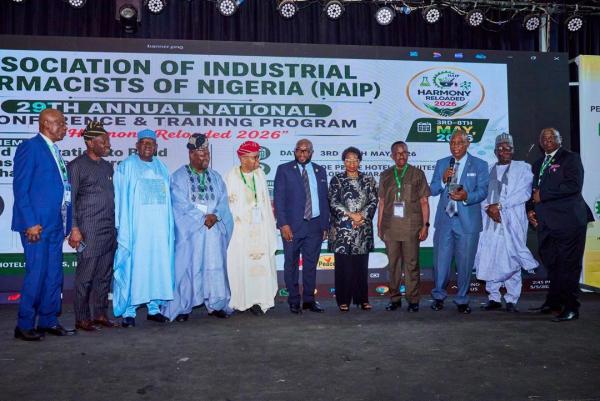
The conference attracted an influential assembly of pharmaceutical leaders and past presidents of the Pharmaceutical Society of Nigeria, including Mohammed Yaro Budah, Azubike Okwor, Olumide Akintayo, Ahmed Yakasai, and Sam Ohuabunwa.
Also represented were the current PSN President, Ayuba Tanko Ibrahim, represented by Gafar Lanre Madehin, alongside the Registrar of the Pharmacists Council of Nigeria, Ibrahim Babashehu Ahmed.
Other notable industry figures in attendance included Val Ezeiru, Ike Onyechi, Azuka Okeke, Lere Baale, Lolu Ojo, Monica Eimunjeze, Osaretin Jayeola, Mubarak Shittu, and Bioku Rahman.
In a strong demonstration of government-industry collaboration, the Kwara State Government deployed a high-powered delegation that included Hauwa Nuru, Mariam Nana Fatima Imam, Bolanle Olukoju, and Abdulraheem Abdulmalik.
Their presence underscored Kwara State’s readiness to partner with industrial pharmacists and investors in creating a sustainable, innovation-driven ecosystem capable of transforming Nigeria into a continental pharmaceutical powerhouse.