



President Bola Tinubu has inaugurated the Presidential Working Group on the National Policing Bill, declaring that Nigeria can no longer delay the implementation of state police and directing the committee to develop the legal framework needed to operationalise the proposed policing system across the country.
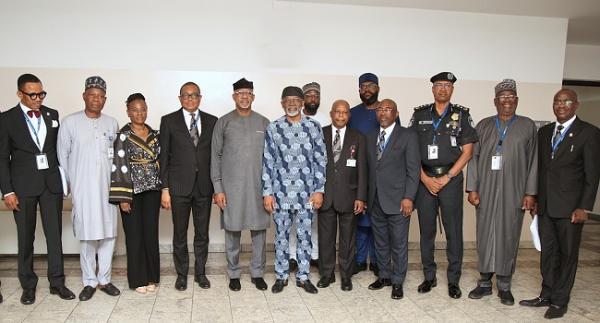
The working group was inaugurated at the Presidential Villa in Abuja by the President's Chief of Staff, Femi Gbajabiamila, who represented President Tinubu.
The committee comprises the Attorney-General of the Federation and Minister of Justice, Lateef Fagbemi (SAN); President of the Nigerian Bar Association (NBA), Afam Osigwe (SAN); Chairman of the Nigeria Governors' Forum (NGF) and Governor of Kwara State, AbdulRahman AbdulRazaq; National Security Adviser, Nuhu Ribadu; Inspector-General of Police, Kayode Egbetokun; and Chairman of the NGF Committee on State Police and Governor of Ogun State, Dapo Abiodun. A dedicated secretariat will provide administrative support for the panel.
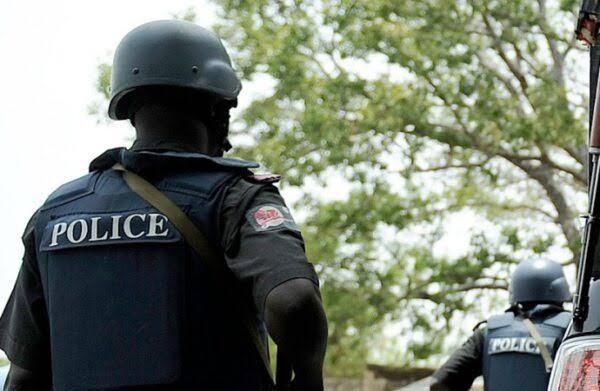
The inauguration follows the passage of the Constitution Alteration (State Police) Bill, 2026, by the National Assembly. The proposed amendment seeks to establish a dual policing system comprising the Federal Police Service and 36 State Police Services.
Speaking at the ceremony, Tinubu said work on implementing the new policing structure must begin before the constitutional amendment process is completed.
"We must not wait until the constitutional process is concluded before beginning this important assignment," the President said.
He explained that while the constitutional amendment provides the legal foundation for state policing, the National Policing Bill will establish the operational and institutional framework required for its implementation.
"The Constitution Amendment Bill establishes the framework for dual policing, but it does not operationalise it. That work is left to the National Policing Bill," Tinubu stated.
According to the President, the proposed legislation will address critical issues, including minimum policing standards, state readiness certification, federal-state coordination, accountability mechanisms, human rights safeguards and fiscal requirements.
"The proposed National Policing Bill will include provisions on minimum policing standards, state readiness certification, federal-state coordination, accountability, human rights safeguards and fiscal conditions," he said.
Tinubu added that the working group had been mandated to produce a technically sound and implementation-ready draft bill for immediate transmission to the National Assembly once the constitutional amendment process is concluded.
"The Working Group has been constituted to produce a technically robust, implementation-ready draft National Policing Bill for transmission to the National Assembly," he said.
Speaking on behalf of the Nigeria Governors' Forum, Ogun State Governor Dapo Abiodun pledged the commitment of state governors to the successful implementation of the reform, assuring that governors would work closely with their respective State Houses of Assembly to accelerate the ratification process.
He described the proposed state police system as a response to longstanding calls for community-based policing and greater decentralisation of security.
"This bill has answered the cries of Nigerians about cascading policing and removing it from the Exclusive Legislative List," Abiodun said.
He noted that the proposal builds on the success of regional security outfits such as Amotekun and could significantly boost Nigeria's policing capacity.
"If each state deploys about 6,000 personnel, we will add nearly 200,000 officers to complement the existing federal police," he said.
Abiodun also praised President Tinubu for initiating implementation plans ahead of the completion of the constitutional amendment process.
"This inauguration demonstrates the proactiveness of the Executive in preparing for effective implementation," he added.
Attorney-General of the Federation, Lateef Fagbemi (SAN), described the initiative as timely in view of Nigeria's prevailing security challenges.
"There is no denying the fact that we are in a critical moment security-wise, and all hands must be on deck," he said, while urging governors to ensure the constitutional amendment is promptly ratified by their respective state assemblies.
NBA President Afam Osigwe (SAN) also endorsed the proposal, arguing that Nigeria's current centralised policing structure is no longer adequate to meet the nation's growing security demands.
"Nigeria can hardly be effectively policed by one national police. We fully support the constitutional amendment providing for state police," he said, while stressing the need for strong legal safeguards to prevent abuse of the system.
Deputy Senate President Jibrin Barau defended the proposed legislation, saying it contains constitutional safeguards designed to prevent governors or other political actors from misusing state police powers.
He explained that the bill was the product of years of consultations involving the Presidency, the National Assembly, security agencies, policing experts and other stakeholders, as well as extensive nationwide public hearings.
Similarly, Deputy Speaker of the House of Representatives, Benjamin Kalu, said concerns over possible abuse had been addressed through stringent oversight mechanisms.
He argued that Nigeria's centralised policing structure is overstretched for a country with a population exceeding 230 million people.
"No other federation of our size operates this way; from Germany to India, from Canada to Australia, the world's great federations police locally and coordinate nationally," Kalu said.
He added, "Our proposal follows that settled wisdom: a constitutional framework allowing states to establish their own police services, with defined jurisdictions, independent oversight, professional recruitment standards and coordinated command."