



With nearly 70 percent of Nigerians still paying directly for medical services, the Board of Fellows (BOF) of the Pharmaceutical Society of Nigeria (PSN) has raised fresh concerns over what it described as one of the biggest threats to the nation's healthcare system, warning that millions of families are being pushed into poverty, delaying treatment and suffering preventable deaths because of the country's overdependence on out-of-pocket healthcare financing.
The pharmaceutical leaders declared that Nigeria can no longer sustain a healthcare financing model that forces citizens to choose between paying hospital bills, feeding their families or meeting other basic needs, insisting that mandatory insurance-based healthcare financing remains the only realistic pathway to achieving Universal Health Coverage (UHC).
The call comes ahead of the BOF-PSN Public Lecture scheduled for July 15 and 16, 2026, at the Marriott Hotel, Ikeja, Lagos, where policymakers, healthcare professionals, corporate leaders and legislators will gather to chart a new course for healthcare financing under the theme, "Insurance-Based Healthcare Financing: Key to Achieving Universal Health Coverage in Nigeria."
Designed as more than another policy dialogue, the summit is expected to produce actionable recommendations and a national roadmap capable of transforming healthcare financing through compulsory insurance coverage, expanded access to quality healthcare and stronger collaboration between government and the private sector.
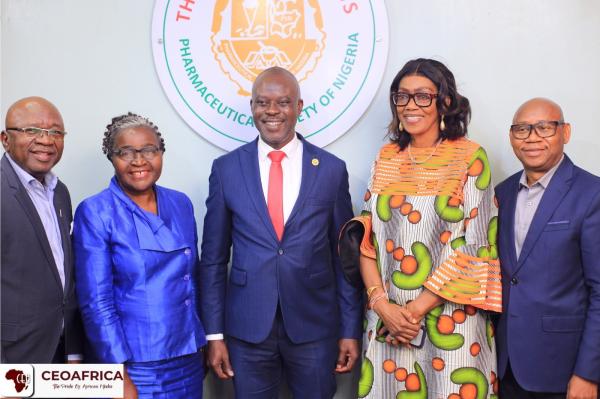
The event will be chaired by former Minister of Health, Prince Julius Adelusi-Adeluyi, FPSN, OFR, mni, while the Director-General of the National Health Insurance Authority (NHIA), Dr. Kelechi Ohiri, will deliver the keynote address. President of the Pharmaceutical Society of Nigeria, Pharm. Ayuba Tanko, FPSN, will serve as Chief Host alongside the Chairman of the Board of Fellows, Pharm. Uchenna Apakama, FPSN.
Chairman of the BOF Public Lecture Planning Committee, Pharm. Ignatius Anukwu, FPSN, said Nigeria's current healthcare financing structure is unsustainable because it exposes households to catastrophic medical expenses that often leave families financially devastated.
According to him, a healthcare system that impoverishes citizens simply because they seek treatment cannot be regarded as functional.
"If you have a financing system that runs families into poverty and makes life uncomfortable and miserable for them, that is not an ideal financing system. We should have a progressive system that allows people to pay for services while still having access to the healthcare they need," he said.
Anukwu explained that Universal Health Coverage guarantees access to quality healthcare services whenever they are needed without exposing citizens to financial hardship, stressing that Nigeria remains far from achieving that goal because healthcare funding is still driven largely by direct payments at the point of service.
He argued that widespread enrollment into health insurance schemes would eliminate the burden of paying hospital bills from personal savings, allowing citizens to receive medical attention whenever necessary.
The pharmaceutical expert urged governments at all levels to expand health insurance schemes for their citizens while calling on lawmakers, philanthropists, corporate organisations and professional associations to sponsor vulnerable populations through health insurance enrollment rather than occasional medical interventions.
According to him, if members of the National Assembly, corporate organisations and other well-meaning Nigerians insured thousands of people within their communities, Nigeria would record rapid progress towards universal coverage while significantly reducing preventable deaths.
He further explained that health insurance operates through a prepayment system where contributors make regular payments to Health Maintenance Organisations (HMOs) and receive healthcare services based on the package selected, whether bronze, silver or gold.
"The beauty of insurance is that the benefits far outweigh individual savings. People contribute together so that anyone who needs healthcare receives support. Today it may be someone else; tomorrow it could be you," Anukwu noted.
While advocating wider enrollment, he acknowledged concerns over the operations of some HMOs, particularly delays in reimbursing healthcare providers, insisting that increased participation would strengthen regulatory oversight, improve accountability and ensure better service delivery across the sector.
Managing Director of Nemitt Pharma Ltd., Ernest Okafor, FPSN, described health insurance as a critical instrument for building a healthier society, arguing that Nigeria should adopt stronger institutional measures to encourage universal enrollment.
Drawing a comparison with the Bank Verification Number (BVN), he suggested that access to certain public services could eventually be linked to health insurance participation in order to accelerate nationwide coverage.
"The more people we bring into the scheme, the safer and healthier our society becomes," he said.
Secretary of the Board of Fellows, Pharm. Izuka Damian, FPSN, maintained that sustainable healthcare cannot exist without sustainable financing, warning that many Nigerians still lack adequate knowledge of health insurance while millions remain unable to afford quality healthcare because of prevailing economic realities.
He lamented that countless households are forced daily to decide whether to spend their limited income on hospital treatment, rent or food, with healthcare often sacrificed because of financial pressure.
According to Damian, pharmacists remain the first point of healthcare contact for many Nigerians, making broader insurance coverage essential for improving access to medicines and primary healthcare services.
He called on both government institutions and private employers to ensure every worker is covered under a functional health insurance programme while encouraging religious organisations and community groups to mobilise their members into existing insurance schemes.
Assistant Secretary of the Board, Pharm. Ngozi Onuorah, FPSN, stressed that sustained public education and awareness campaigns would be critical in increasing public understanding and acceptance of health insurance across the country.
Financial Secretary of the Board, Pharm. (Dr.) Margaret Obono, FPSN, warned that Nigeria's ambition of attaining Universal Health Coverage before 2030 would remain elusive without consistent political commitment, adequate funding and coordinated implementation by all stakeholders.
The BOF also commended states such as Lagos and Adamawa for making significant progress in expanding health insurance coverage, describing them as examples worthy of replication across the federation.
As anticipation builds ahead of the landmark summit, the Board of Fellows said the conference would culminate in a comprehensive communiqué containing policy recommendations aimed at repositioning Nigeria's healthcare financing architecture and accelerating universal health insurance coverage.
The Board reaffirmed its vision of a Nigeria where every citizen is protected by health insurance, insisting that expanding insurance coverage is not merely a healthcare reform but a national economic strategy capable of reducing poverty, improving productivity and guaranteeing equitable access to quality healthcare for all.