



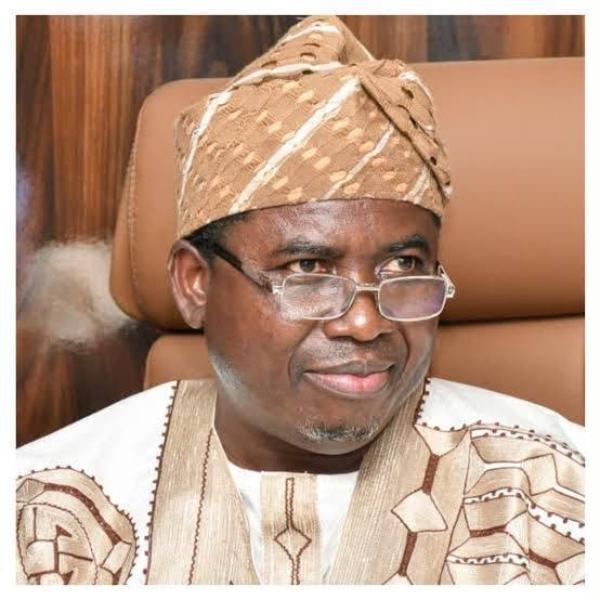
The Chairman of the Independent National Electoral Commission (INEC), Professor Joash Amupitan, has insisted that the 2027 general elections will hold as scheduled, ruling out any possibility of altering the commission’s statutory timetable.
Amupitan made this known in Port Harcourt, Rivers State, during an interactive meeting with INEC staff from the six South-South states to assess their level of preparedness for the forthcoming general elections.
The INEC chairman stressed that the commission would not deviate from its established electoral schedule, adding that it remained committed to conducting credible elections in accordance with the law.
“Our statutory timeline is fixed. We will not change anything. The election must hold as scheduled,” he declared.
He disclosed that Rivers State would receive increased attention in INEC’s preparations because it has the highest number of registered voters in the South-South region.
According to figures presented by Amupitan, Rivers has 3,736,434 registered voters, followed by Delta with 3,525,988 and Edo with 2,865,263.
Akwa Ibom has 2,566,198 registered voters, Cross River has 1,928,978, while Bayelsa has 1,200,691.
“With the 3,736,434 registered voters for Rivers State, the state leads the South-South. By this, the commission will put more attention to what happens in Rivers State,” he said.
He charged INEC officials to ensure that no eligible voter was disenfranchised due to operational failures, stressing that the commission must demonstrate efficiency at every stage of the electoral process.
On the ongoing review of the voters’ register, Amupitan said INEC had published the register online and at designated locations to enable Nigerians to scrutinise their details and raise necessary objections.
He disclosed that the commission had received more than 5,000 claims for corrections, including changes to names and dates of birth, as well as over 600 objections.
According to him, the submissions were being processed to ensure the accuracy and credibility of the register ahead of the elections.
He confirmed that the final voters’ register would be released on December 15, assuring that all outstanding issues would be resolved before then.
Amupitan also revealed that he had initially considered conducting a fresh revalidation of the voters’ register after assuming office but abandoned the proposal because of concerns that the exercise would be too close to the general elections.
Speaking on INEC’s preparedness, the chairman expressed confidence in the commission’s ability to deliver peaceful, transparent and credible elections, citing lessons learnt from recent off-cycle governorship elections, particularly in Osun State.
He noted that the Osun election recorded the highest voter turnout for an off-cycle governorship poll in the state and received positive assessments from local and international observers despite earlier security concerns.
“Osun State elections gave us the confidence that we can achieve this despite the noise. It is good that we had a series of those elections before the general elections because we learn lessons from every election,” he said.
He assured Nigerians that the commission would apply the lessons from previous elections to improve its preparations for 2027.
“We will conduct elections that will move the nation forward and not an election that will bring it down,” he added.
On security, Amupitan disclosed that INEC was collaborating with the police, the Department of State Services (DSS) and other security agencies to guarantee the safety of voters, electoral personnel, ad hoc staff and election materials.
He maintained that efforts to encourage Nigerians to collect their Permanent Voter Cards (PVCs) must be matched with adequate security arrangements to enable them to vote without fear.
“We want every part of Nigeria to be calm during the elections so that people can come out to vote. We will not tell them to take their PVCs and then will not guarantee their safety,” he said.
Addressing concerns about the possible influence of artificial intelligence on the 2027 elections, the INEC chairman dismissed suggestions that AI or computer algorithms would determine the outcome of the polls.
“It is the people of Nigeria that will decide the outcome of the elections and not AI or any algorithms,” he stated.
However, he acknowledged the growing cybersecurity threats associated with artificial intelligence, saying the commission would explore ways of deploying technology to strengthen the security of its systems and prevent cyberattacks.
Amupitan further assured that INEC was upgrading its digital infrastructure to guard against interference and protect the integrity of its electoral operations.
He urged staff across the South-South region to remain diligent and professional, emphasising that the credibility of the 2027 general elections would depend significantly on the conduct of electoral officials at polling units and other field locations.