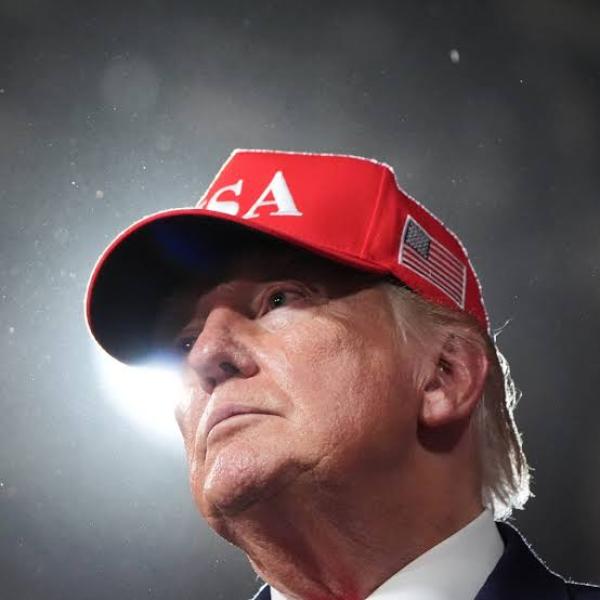





United States of America’s President, Donald Trump, has signed an executive order to withdraw from the Trans-Pacific Partnership trade deal (TPP).
The trade pact, which was a linchpin of former President Barack Obama's pivot to Asia, was signed by 12 nations and covered 40% of the world's economy.
The directive was part of a series of executive orders planned for Monday to begin reshaping US trade policies.
He had vowed to quit the TPP during his presidential campaign and criticised the trade agreement as a "potential disaster for our country", arguing that it harmed the US manufacturing sector.
The massive trade deal was negotiated in 2015 by nations including the US, Japan, Malaysia, Australia, New Zealand, Canada and Mexico, but has not yet been ratified by the individual countries.
Its aim was to strengthen economic ties and boost growth, including by reducing tariffs.
It also included measures to enforce labour and environmental standards, copyrights, patents and other legal protections.
Earlier on Monday, Trump pledged to "massively" cut regulations and taxes on companies that keep jobs in the US.
This followed a meeting with executives from companies including defence manufacturer Lockheed Martin, apparel maker Under Armour, appliance manufacturer Whirlpool, electric-carmaker, Tesla and pharmaceutical giant, Johnson & Johnson.
After meeting business leaders, Trump also warned them he would impose a "very major border tax" on companies that move manufacturing out of the US.
"We're going to be cutting regulation massively", but the rules will be "just as protective of the people", he told journalists after the morning meeting in the White House's Roosevelt Room.
He pledged to lower corporate taxes to 15% or 20% from the current 35% and lift regulations by up to 75%.
Since winning the White House, Mr Trump has upbraided US companies that have moved factories overseas.
Vowing to slap taxes on foreign-manufactured products, he told executives today that "All you have to do is stay."
According to his schedule, the president will meet labour leaders in the afternoon.
The president is also expected to sign an executive order to renegotiate the North American Free Trade Agreement (NAFTA), a trade pact between the US, Canada and Mexico; he has blamed NAFTA for depriving American workers of their jobs.
The US Senate will meanwhile vote on the nomination of Mike Pompeo to be Central Intelligence Agency's (CIA) director.
Rex Tillerson's nomination as Secretary of State was effectively assured on Monday as Senator Marco Rubio dropped his objections.
Yesterday, President Trump spoke by telephone with Israel Prime Minister Benjamin Netanyahu from the White House situation room.
Trump said his conversation with Netanyahu, who had a tense relationship with Obama, was "very nice".
A White House summary of the call did not mention the president’s plan to move the US embassy in Israel from Tel Aviv to Jerusalem, which would overturn two decades of US policy.
The Jerusalem Embassy Act of 1995 requires the US president to transfer the embassy to Jerusalem unless he certifies every six months that it is not in the national interest.
He has until May to make a formal decision.
White House press secretary Sean Spicer said the administration was "at the very beginning stages of even discussing this subject".
On Saturday, Donald Trump launched a stinging attack on media reporting of attendance figures and the weather at his inauguration.
During a heated exchange on National Broadcasting Company (NBC) yesterday, his senior adviser, Kellyanne Conway, said the White House had "alternative facts", a phrase that quickly went viral.