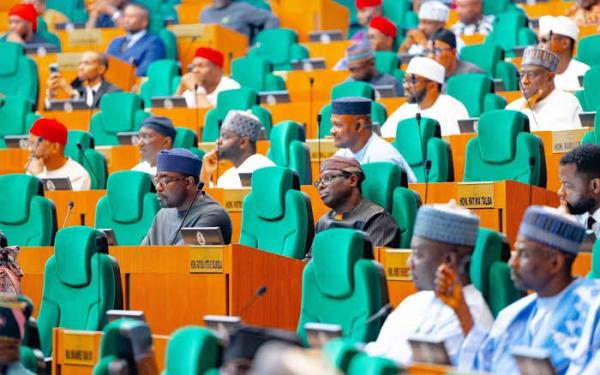





Scholars and Academics from different parts of the world converged on the conference centre of the University of Ibadan on Wednesday 2nd August 2017 to discuss about issues relating to tax havens and its impact on world economy
The conference which was tagged ‘’International Conference on Tax Havens and the Developing World: The Global Dimension’’ had distinguished personalities delivered their keynote addresses on the impact of tax havens on developing economy.

Speakers at the afternoon session of the first plenary discussed on various topics regarding to tax havens.
Prof Odejide Abiola of the Department of Communication and Language Arts, University of Ibadan in her paper presentation tagged ‘’ Expanding the Narratives: Media Coverage of the Panama Paper Scandal in Nigeria’’ explained the role of the media in investigation of the panama paper scandal.
Panama Paper Scandal which she described as the biggest data leak of more than 11.5 million financial and legal records of a system that enables crime, corruption and wrongdoing hidden by secretive offshore companies , had Premium times as the only African media chosen out of 107 media organisations drawn from 80 countries in the investigative journalism.

While revealing the findings of the investigation, Odejide asserted that transparency makes corruption more risky and that the social media has better leverage.
Yoshida Akio of the Centre for Media Studies, School of Social Science, Jawaharial Nehru University (JNU) New Delhi in his paper presentation tagged ‘’Political Finance and Black Money: A Social Network Analyses’’ , explained the damages done to India’s economy as a result of tax haven.
Yoshida described as shocking the decision declared by India’s Prime Minister on November 18 2016 that all 500 and 1,000 rupee notes to be ‘’ Worthless Paper ‘’.
This surprise demonitisation he said, sucked out 86 per cent of cash from circulation, apparently in an attempt to flush out uncounted wealth or ‘’black money’’. This demonitisation in turn caused short term damage in the form of ‘’job losses, declines in farm incomes and social disruption, especially in cash-intensive sectors’’ as recently published in the Economic Survey 2016 by the country’s Financial Ministry.

In the paper presented by Ihuoma Chinonso and Etuk Akaninyene Ufot of the Department of History University of Ibadan on the topic ‘’Tax Evasion, Tax Haven and Multinational Corporations: The Nigerian Dilemma’’ an insight was given on how the power players such as World leaders, Politicians and associates in collaboration with the Multinational companies syphoned the economy of Nigeria via tax haven.
Ihuoma expressed disappointment over the silence of the government even after the revelations made in the panama paper scandals which indicted some past and present political office holders, business moguls and religious leader. She recommended that the ‘’Romance between the politicians and offshore or multinational companies should be severed by improving on the tax data base to curb evasion and also Nigeria should embark on cooperate tax rate.

Nwachukwu Uzoamaka of the Department of History University of Ibadan in her paper presentation tagged ‘’The Panama Paper Conundrum: Building Financial Mansion from Corruption’’ exposed how tax haven has facilitated corruption in Africa.
Tax haven, she said are countries with low or no tax regime that serves as sanctuary for foreign financial exchange, that make laws which protects the identity of their clients thus encouraging corruption within African countries.
Uzoamaka cited the cases of Golf World Oil foreign reserve of over 21million dollar which was stolen between 1985-1992 in Nigeria and the 2004 African Union Conference Report in Ethiopia which stated that African Continent has lost about 850 billion dollars between 1970 -2008 are also linked to tax haven.
Giving names of some African countries like Liberia, Sao Tome and many more that are members of tax haven and African leaders who were indicted in the panama paper scandals, Uzoamaka submitted that tax haven is not heritage of Europe but inherent in other continents.

Mr Ogunniyi Olayemi Jacob of the Department of History, Faculty of Arts, University of Ibadan in his paper presentation tagged ‘’A Historical Assessment of Tax Haven and Terrorism Financing in the Developing World’’, the presenter was able to reveal how nations funds were diverted to terrorism.
Aside kidnapping and armed robbery which is common means of fund raising for terrorists, some nations are involved in financing terrorist.
Using ISIS as a case study which have networks with their collaborators in countries like Libya, Yemen and some parts of Afganistan , generate funds through their collaborators.
Charities, private donations, students loan and fund raising websites are other means through which terrorism is being funded.