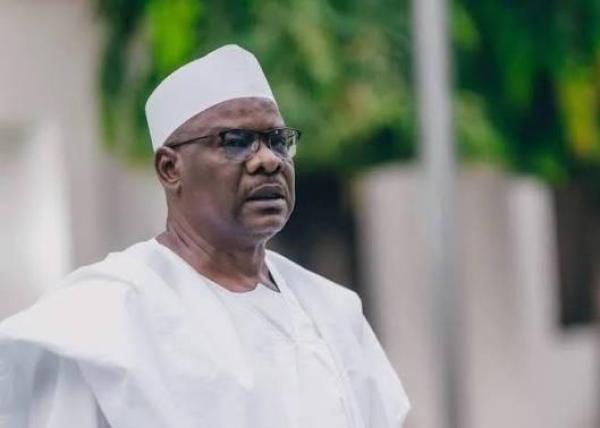




The former Chairman of the Independent National Electoral Commission (INEC), Professor Attahiru Muhammadu Jega has on Thursday said that sustainable electoral process with requite integrity is the panacea for democratic development in Nigeria.
Professor Jega disclosed this while delivering the convocation lecture titled “Towards Credible Electoral Process and Sustainable Political Systems in Nigeria: What Role for Universities?” at the International Conference Centre during the 71st Foundation Day and Convocation of the University of Ibadan.
Speaking at the convocation, “It is generally recognized that fortifying democracy is vital to sustainable development, but what is not as widely acknowledged is that improving the integrity of elections is key to democratic development. A sustainable electoral process with requite integrity is the panacea for democratic development in Nigeria, and all African countries struggling with the challenges of democratization” he said.
“All over Africa, and indeed, to some extent, through the developing world, the electoral process is failing to entrench good governance and stable and sustainable democratic political systems as a result of what can be termed as a deficit of electoral integrity. Deeply embedded unwholesome practices, such as use of money, violence, incumbency powers, and range of electoral malpractices and fraudulent activities in the electoral process grossly undermine its utility as a vehicle for liberal democratic development” he said.
The former INEC boss stated that Nigeria could achieve greater integrity in its electoral process through the collaboration of stakeholders.
“The Nigerian electoral process has historically been flawed and replete with profound challenges in all three key phases of electoral administration pre-election, election, and post-election phases. All stakeholders, therefore, must play a positive role in bridging these gaps”.
Professor Jega further stated that to restore and protect the integrity of our elections, there is need for continuous legal and administrative reforms, as well as sensitization and public enlightenment.
The former INEC boss commended the role of academia in raising the bar of electoral administration in Nigeria since 2011.
He however urged for more collaboration by way of research, advocacy, training and mentoring of all actors involved, particularly in inventing in-house election-related equipment and technologies.
“Universities and academics can and should partner with the election management bodies, such as State Independent National Electoral Commission (SIECs) and the Independent National Electoral Commission (INEC), as well as Civil Society Organizations (CSOs) for series of general capacity and targeted training programmes that add value to the integrity of our electoral governance processes for democratic development” he said.