



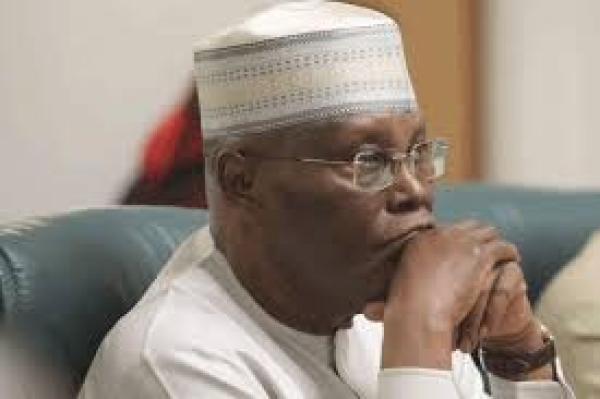
Former Vice-President Atiku Abubakar has described the recurring attacks in Plateau State as bearing the “signature of organised terrorism,” following the killing of five residents in the Nding Susut community of Barkin Ladi Local Government Area.
The victims were reportedly killed on Tuesday night when gunmen attacked the community in the Fan district of the state.
In a statement issued on Thursday by his Senior Special Assistant on Public Communication, Phrank Shaibu, Atiku said the repeated attacks exposed what he described as the absence of an effective counterterrorism strategy under the administration of President Bola Ahmed Tinubu.
According to the former vice-president, the persistent violence in Plateau reflects a growing pattern of coordinated assaults on vulnerable communities, while government responses remain “slow and reactive.”
“The violent crises in Plateau State have become an open sore that Nigeria must urgently heal,” Atiku said.
“What is happening is no longer random violence. It is a recurring pattern of coordinated terror attacks against vulnerable communities.”
He further alleged that attackers returned to the same community less than 24 hours after an earlier assault, describing the development as evidence of security failures in responding to distress calls and protecting residents.
Atiku also expressed concern over conflicting accounts surrounding the incident, noting reports from community leaders that mourners were attacked during a mass burial, while police authorities reportedly disputed aspects of the narrative.
“What Nigerians deserve at this moment is not bureaucratic contradiction or institutional defensiveness, but urgent action, accountability, and protection for human lives,” he added.
The former presidential candidate said Nigerians were weary of “condolences without protection” and “outrage without action,” stressing that repeated attacks in Plateau had exposed weaknesses in the country’s security architecture.
“There can be no justification whatsoever for this repeated failure. The inability of security agencies to dominate and secure areas that have become repeated theatres of bloodshed is deeply troubling,” he said.
Atiku also criticised President Tinubu for not visiting communities affected by the March 29 attacks in Jos North Local Government Area during his April 2 visit to Plateau State.
“Leadership demands more than carefully staged appearances; it demands empathy, courage, and decisive action,” he said.
The former vice-president further accused the federal government of failing in its constitutional responsibility to protect lives and property, citing reports indicating that more than 2,500 people had been killed in Plateau State between 2023 and 2025.
“These are not mere statistics. They are fathers, mothers, children, farmers, worshippers, and breadwinners whose lives have been cut short while government continues to grope in the dark for solutions,” he stated.
Atiku maintained that there was no clear evidence that the federal government had developed a coherent strategy to end the violence, warning that investigations alone would not stop the killings unless the structures enabling the attacks were dismantled.
He called on the federal government, security agencies, and the Plateau State government to adopt a comprehensive and intelligence-driven approach to restore peace and public confidence in the state.
“The people of Plateau State deserve safety, justice, and peace — not endless mourning and empty political rhetoric,” he said.