


The leadership of the Pharmaceutical Manufacturers Group of the Manufacturers Association of Nigeria (PMG-MAN), led by Group Chairman, Oluwatosin Jolayemi, Esq., and Chairman of the Organising Committee of the Nigeria Pharma Manufacturers Expo (NPME), Pharm. Dr. Patrick Ajah, has intensified efforts to secure a two-year extension of the Presidential Executive Order supporting local pharmaceutical manufacturing, as the Federal Government signalled its commitment to sustaining policies aimed at strengthening domestic drug production.
The push for an extension comes as pharmaceutical manufacturers seek to consolidate recent gains in local production, reduce dependence on imported medicines and position Nigeria as a leading pharmaceutical manufacturing and life-sciences hub in Africa.
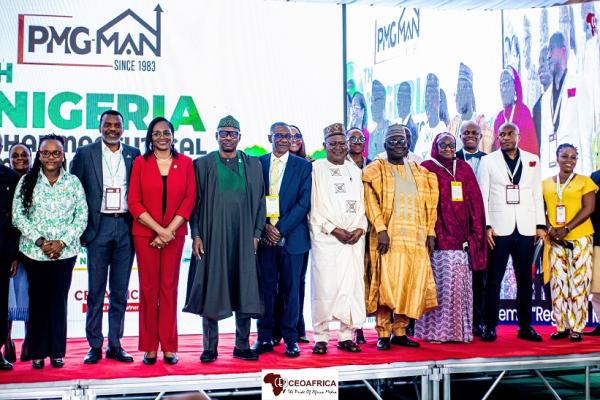
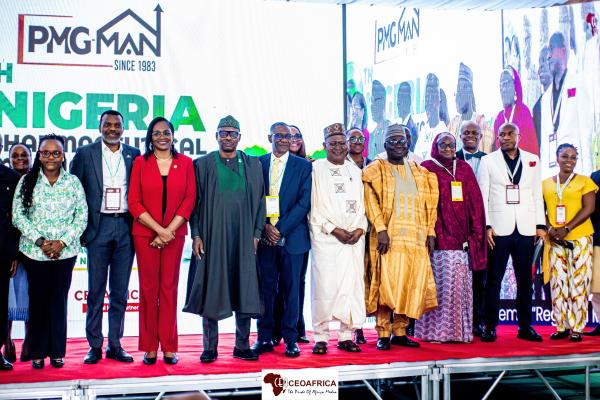
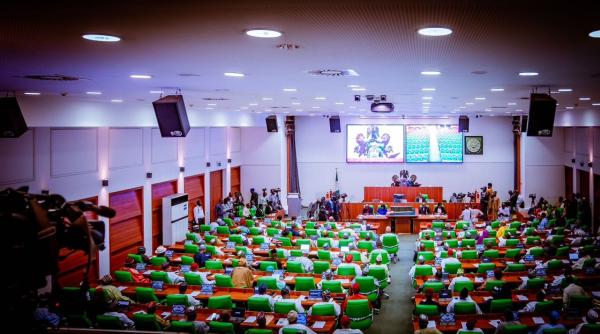
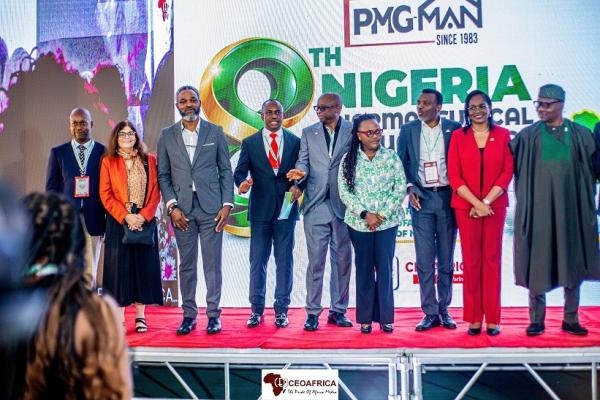
The policy discussions featured prominently at the 8th Nigeria Pharma Manufacturers Expo (NPME 2026), held on September 28 and 29 at Harbour Point, Victoria Island, Lagos. Organised by PMG-MAN in strategic partnership with CEOAFRICA, the two-day event was themed, “Regional Manufacturing: Advancing Africa’s Pharma & Lifescience Sovereignty through Localization.”
The expo attracted more than 200 exhibitors, alongside healthcare policymakers, investors, development partners, regulators and other stakeholders in the pharmaceutical value chain. Participants included representatives of the European Union, UNICEF, the European Investment Bank, the Bank of Industry, the International Finance Corporation and the World Bank, the Pharmacy Council of Nigeria, academic institutions, federal ministries and the Lagos State Government, represented by its Special Adviser on Health, Dr. Kemi Ogunyemi.
Speaking as Chairman of the occasion, Jolayemi, who is also the Chief Executive Officer of Daily Need Industries Limited, called on the Federal Government to extend the Presidential Executive Order, which is expected to expire in March 2027, by another two years to sustain the progress recorded in domestic pharmaceutical manufacturing.
Representing PMG-MAN’s membership of more than 200 local manufacturing companies, Jolayemi stressed that a stable and predictable policy environment was essential to attracting investment, expanding production capacity and strengthening Nigeria’s medicine security.
He noted that government policies supporting local pharmaceutical production had contributed to a significant shift in the country’s medicine supply structure, reducing historical dependence on imported medicines from about 70 per cent to a more balanced 50:50 ratio between imports and domestic production.
According to him, extending the Executive Order would enable manufacturers to consolidate these gains, improve their competitiveness and advance the country’s ambition of achieving greater self-sufficiency in essential medicines.
Jolayemi also urged the government to address persistent challenges confronting local manufacturers, including high energy costs, supply chain disruptions, port inefficiencies, limited access to affordable capital and friction among government agencies. He further advocated continuity in regulatory leadership, including an extension of the tenure of the Director-General of the National Agency for Food and Drug Administration and Control (NAFDAC), to sustain ongoing reforms and regulatory progress.
Supporting the call for stronger domestic manufacturing, Ajah, Chairman of the NPME 2026 Organising Committee and Managing Director/Chief Executive Officer of May & Baker Nigeria Plc, described pharmaceutical production as a critical pillar of national development, economic growth and health security.
Ajah maintained that no nation could achieve sustainable greatness without developing the capacity to manufacture the essential products consumed by its citizens. He recalled that Nigeria had historically relied heavily on imported medicines but noted that deliberate collaboration between government and the private sector over the past two years had begun to change the situation.
Welcoming delegates to the expo, he described the participation of senior government officials and key institutional stakeholders as a strong endorsement of PMG-MAN’s objectives. He urged industrialists, investors and development partners to leverage public-private partnerships to expand pharmaceutical manufacturing in Nigeria and strengthen access to regional and international markets.
The Federal Government, through its representatives at the expo, reaffirmed its commitment to supporting local pharmaceutical producers through fiscal incentives, financing mechanisms and policies designed to improve domestic production capacity.
Declaring the expo open, the Minister of State for Health and Social Welfare, Dr. Iziaq Adekunle Salako, disclosed that 87 local pharmaceutical manufacturers were already benefiting from zero tariffs on pharmaceutical machinery, active pharmaceutical ingredients (APIs) and excipients covered by nearly 1,000 Harmonized System codes under the Presidential Executive Order.
Salako reiterated the Federal Government’s target of achieving at least 70 per cent domestic production of essential medicines by 2030 under the Presidential Initiative to Unlock the Healthcare Value Chain. He also highlighted approximately $2 billion in single-digit financing commitments intended to support investment and expansion across the healthcare value chain.
Similarly, the Minister of State for Industry, Trade and Investment, Senator John Owan Enoh, represented by the Director of Chemical and Non-Pharmaceutical Industry, Mr. John Okpe Oluwa, reaffirmed the government’s determination to move Nigeria away from excessive import dependence towards greater domestic production.
He said the administration’s Renewed Hope Agenda prioritised the development of local industries through measures such as backward integration incentives, tariff waivers on raw materials and dedicated intervention funds. These interventions, he explained, were also expected to strengthen the capacity of Nigerian manufacturers to compete in export markets under the African Continental Free Trade Area.
Providing a regulatory perspective, the Director-General of NAFDAC, Prof. Mojisola Christianah Adeyeye, disclosed that 37 local pharmaceutical manufacturing facilities were undergoing retrofitting and construction upgrades to meet international standards.
Adeyeye noted that the agency’s 5+5 policy and Nigeria’s participation in the World Health Organisation’s global benchmarking process had contributed to efforts to improve manufacturing quality, strengthen regulatory oversight and curb the circulation of substandard imported medicines.
From a continental perspective, the Director-General of the African Medicines Agency, Dr. Delese Mimi Darko, called for stronger regulatory cooperation among African countries to harmonise standards, facilitate market access and promote indigenous pharmaceutical research, technology transfer and intellectual property development.
She emphasised the importance of coordinated regulatory systems in enabling African manufacturers to expand beyond their domestic markets and compete more effectively across the continent.
The Lagos State Government also pledged continued support for the pharmaceutical manufacturing sector. Its Special Adviser on Health, Dr. Kemi Ogunyemi, assured industry stakeholders of the state government’s readiness to collaborate with manufacturers in addressing infrastructure costs, energy challenges and the need for predictable regulatory and operating conditions.
As part of its long-term strategy to strengthen industry self-reliance and product quality, PMG-MAN unveiled its Industry Self-Regulation Quality Plus (ISRQ+) Project at the expo.
The initiative comprises a five-year Medicine Security Industry Advocacy Strategy covering 2027 to 2031, an ISRQ+ analytical quality standards laboratory, and a Data Repository and Learning Centre. The components are designed to strengthen evidence-based advocacy, improve quality assurance capacity and provide reliable industry data to support policy engagement and strategic decision-making.
PMG-MAN indicated that full commissioning of the project’s components was expected within the next six to 10 months, marking another step towards strengthening the industry’s capacity to support medicine quality and security.
Delivering the closing remarks, Pharm. Frank Muonemeh urged stakeholders to sustain their commitment to closing Nigeria’s medicine access gap and advancing long-term health security across Africa.
The expo ended with PMG-MAN announcing that preparations were already underway for the 9th Nigeria Pharma Manufacturers Expo in 2028, setting the stage for continued engagement among manufacturers, policymakers, investors and development partners.
With the call for a two-year extension of the Presidential Executive Order at the centre of discussions, the 2026 edition of the expo underscored the pharmaceutical industry’s push for sustained government support, stronger local production capacity and a more resilient medicine supply chain capable of positioning Nigeria as a leading pharmaceutical manufacturing hub in West Africa.