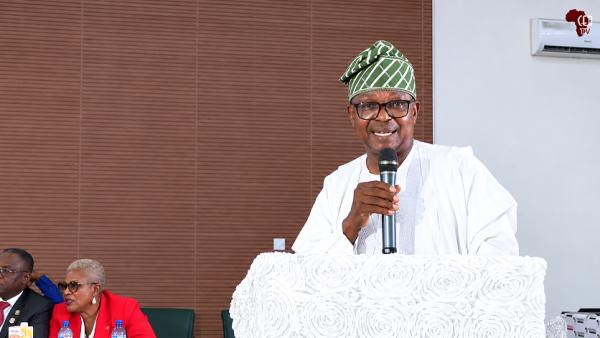



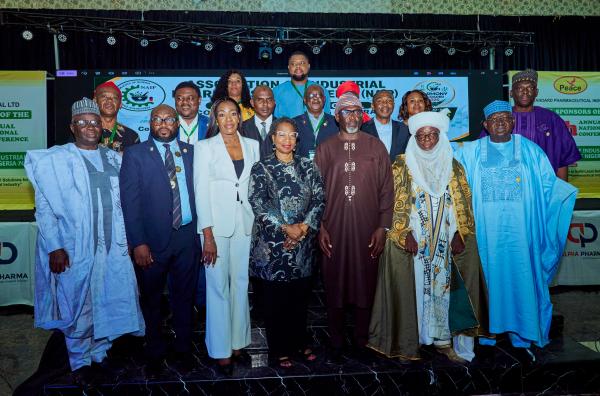
Staholders at the 29th Annual National Conference of NAIP TAGGED "ILORIN RELOADED"
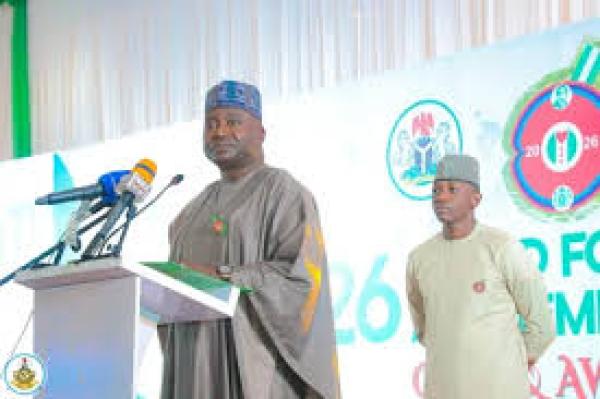
The National Chairman of the Association of Industrial Pharmacists of Nigeria (NAIP), Pharm. (Sir) Bankole Ezebuilo, has called on the Federal Government to urgently strengthen support for local pharmaceutical manufacturing as part of efforts to reduce Nigeria’s dependence on imported medicines and position the country as the pharmaceutical hub of Africa.
Ezebuilo made the call during the 29th Annual National Conference and Training of NAIP held in Ilorin, Kwara State, with the theme: “Collaboration and Innovation to Build Local Solutions for the Future of Nigeria’s Pharmaceutical Industry.”
Addressing pharmaceutical stakeholders, regulators, manufacturers, policymakers, and healthcare professionals at the conference, the NAIP chairman warned that no nation can afford to outsource its healthcare security.
“No nation can outsource its health security,” he declared.
He noted that Nigeria currently imports more than 70 percent of its medicines, a situation he described as dangerous to national healthcare stability and economic sustainability.
According to him, Nigeria is now at a critical crossroads where it must choose between continued dependence on imported medicines or the pursuit of pharmaceutical sovereignty through aggressive local production.
To reverse the trend, Ezebuilo urged the Federal Government to declare a national emergency on pharmaceutical manufacturing and implement policies capable of transforming Nigeria into the definitive pharmaceutical manufacturing hub in Africa.
He further assured President Bola Ahmed Tinubu that NAIP has trained and equipped its members and remains fully prepared to partner with government in driving the nation’s pharmaceutical industrial revolution.
The industrial pharmacist stressed that sustainability in healthcare delivery cannot be imported but must be deliberately built through a united ecosystem involving government, industry players, academia, development partners, and regulators.
He explained that the conference theme was carefully chosen to address the growing challenges confronting the pharmaceutical sector, especially amid global supply chain disruptions and persistent currency volatility.
“No nation can outsource its health security, and no sector can thrive in isolation,” he said, emphasizing the need for stakeholders to move beyond institutional silos.
Ezebuilo warned that a nation unable to produce its own medicines would remain vulnerable during global emergencies and healthcare crises.
“A nation that cannot produce its own medicines is a nation negotiating with its health, and negotiation is not where you want to be when lives are at stake,” he stated.
He added that heavy reliance on imported pharmaceutical products continues to weaken treatment access, expose the country to supply disruptions, and increase vulnerability during international crises.
Highlighting the need for deeper industrial reforms, Ezebuilo pointed out that although Nigeria manufactures some finished pharmaceutical products locally, the majority of Active Pharmaceutical Ingredients (APIs) are still imported.
According to him, achieving pharmaceutical self-sufficiency would stabilize medicine supply, improve quality control, create jobs, conserve foreign exchange, and position Nigeria as a strategic regional manufacturing hub.
He emphasized that bridging healthcare access gaps requires the development of a reliable local production system capable of manufacturing high-quality and compliant medicines within Nigeria.
“To build local solutions, we must stop importing not just medicines, but also ideas,” he said.
Quoting a popular leadership principle, Ezebuilo challenged Nigerian pharmacists and stakeholders to become architects of the future they desire.
“The best way to predict the future is to create it.”
He called on government to provide enabling policies while urging investors to commit boldly to pharmaceutical manufacturing and innovation. He also appealed to academic institutions to align research activities with practical industrial and healthcare needs.
The NAIP chairman stressed that the pharmaceutical sector must move beyond endless discussions and conferences toward building real industrial capacity and measurable outcomes.
To illustrate the dangers of inadequate technical competence, he shared the story of a driver named Joseph who, despite being hardworking and loyal, lacked the proper training to interpret road signs correctly, resulting in misplaced effort.
According to him, such capacity gaps within the pharmaceutical sector could slow innovation, weaken systems, and compromise healthcare quality.
In a major highlight of the conference, Ezebuilo commissioned and renovated healthcare centres worth millions of naira at the Palace of the Emir of Ilorin to strengthen grassroots healthcare delivery.
The humanitarian outreach, conducted under NAIP’s vision of “Speaking Humanity with Passion,” also featured a large-scale free medical programme led by the Kwara State Commissioner for Health, Dr. Amina L. Imam.
The initiative provided medical consultations, specialized healthcare interventions, and free drugs to over 1,000 indigent residents from Ilorin and surrounding communities including Oke-Oyi, Iponrin, Apado, and Egbejila.
The conference organizing committee, led by Central Planning Committee Chairman High Chief Theophilus Emeka Adimoha, alongside other NAIP executives and committee members, was widely commended for successfully delivering both the conference and the impactful community outreach programme.
The event also featured a keynote address by internationally respected pharmaceutical executive Dr. Henrietta N. Ukwu, who travelled from the United States to participate as a keynote speaker and trainer.
Several distinguished pharmaceutical leaders attended the conference, including past presidents of the Pharmaceutical Society of Nigeria (PSN), among them Pharm. Mohammed Yaro Budah, Pharm. Azubike Okwor, Pharm. Olumide Akintayo, Pharm. Ahmed Iyakassai, and Mazi Sam Ohuabunwa.
Also present were current PSN President Pharm. Ayuba Tanko Ibrahim, represented by Pharm. Gafar Lanre Madehin; Registrar of the Pharmacists Council of Nigeria, Pharm. Ibrahim Babashehu Ahmed; and leaders of various PSN technical groups and pharmaceutical associations.
Industry stakeholders present included Pharm. Val Ezeiru, Pharm. Ike Onyechi, Dr. Azuka Okeke, Prof. Lere Baale, Dr. Lolu Ojo, Dr. Monica Eimunjeze, Dr. Osaretin Jayeola, Mubarak Shittu, and Pharm. Bioku Rahman.
The Kwara State Government was also strongly represented by Commissioner for Finance Dr. Hauwa Nuru, Commissioner for Social Welfare Dr. Mariam Nana Fatima Imam, Commissioner for Communication Hon. Bolanle Olukoju, and Executive Secretary of the Hospital Management Board Pharm. Abdulraheem Abdulmalik.
As the conference concluded, Ezebuilo reiterated that Nigeria’s healthcare future would not be imported but built through skilled manpower, innovation, collaboration, and strong local manufacturing capacity.
“If we get it right, we will transform this industry, create jobs, reduce dependency, compete globally, and deliver healthcare locally,” he concluded.